

Sailing to London in style...
Sailing yacht Elise to London, so much more than a city trip!
There is no need to promote a visit to London, everyone knows a reason to visit this versatile capital. You should experience it by sailing on a 64 ft yacht! It will be a unique experience. This is something completely different from travelling through a tunnel, by train or even the Ferry.

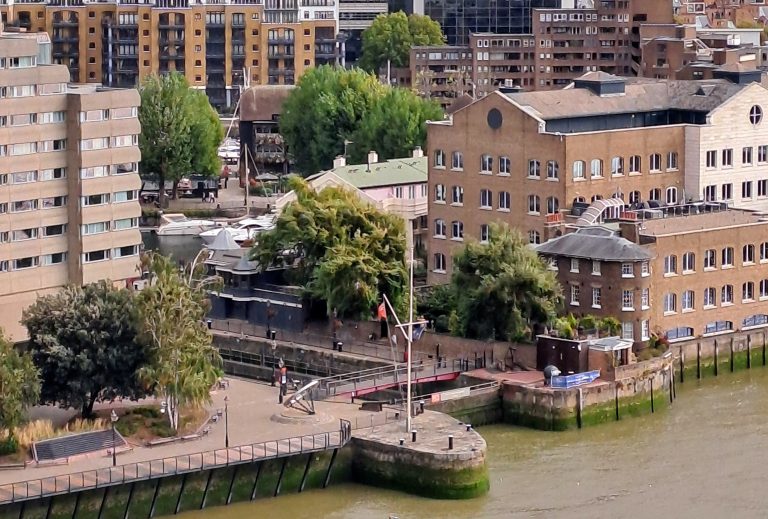
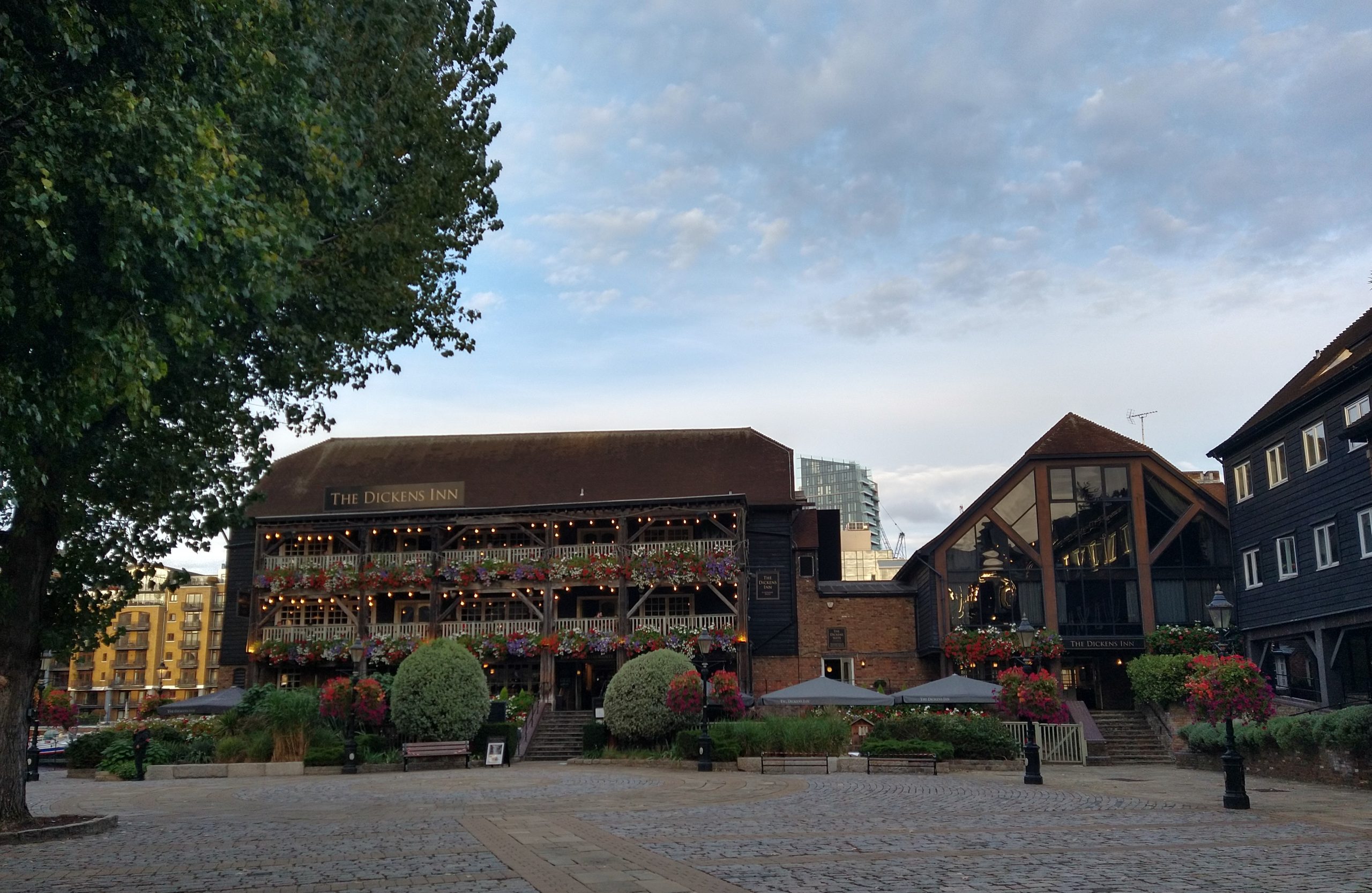
First of all: with our boat you take your hotel room with you, no stress of booking a hotel in the city centre, lugging suitcases from the train and ferry or taxi to a place in the city. You ‘put’ your living room, kitchen, bedroom even your sun terrace next to the iconic Tower Bridge, at arm’s length from the Tower in the renowned St Katharine Docks.
On this trip, it is not just the destination that is important, but the trip, the experience. Cruising up the river The Thames – between iconic landmarks, monuments, works of art – on the way to the metropolis, is a distinct experience. That mix of excitement, recognition, amazement is hard to describe. Everyone on board agrees: the Thames is the highlight of the trip!
St Katharine Docks
The Thames is best navigated in daylight. It is a 40-45 mile trip, you have to neatly navigate the fairway and scrupulously follow the instructions of the Port of London Authority. At most, a little sail to support if the wind is right in the winding course. Above all, we want to enjoy this upwind sailing.
We look to make currentward (LW ) the trip. Start at low tide in the estuary to be at the Tower around high tide. It looks easy, but not all days are easy.
To start at the right timing, you almost have to make the Ostend-London trip in at least two days. So count on at least one day to sail to the mouth of the Thames. There we choose a mooring for one night at Queenborough, the ideal base.
Plan well! There are some restrictions.
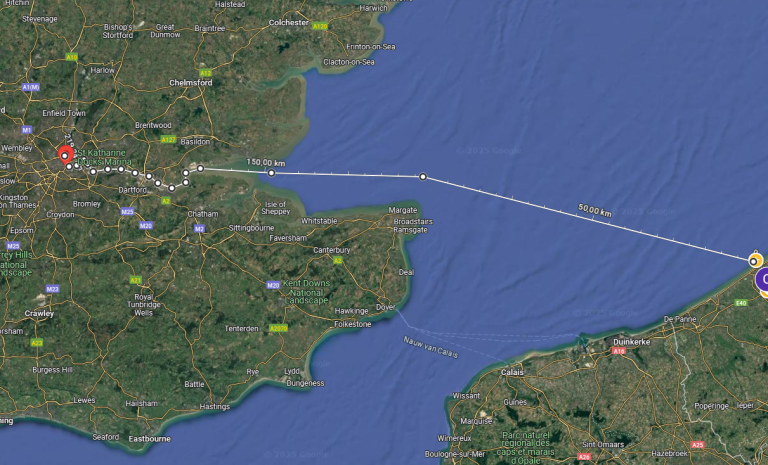
Prepare everything well and then keep an eye on the weather for a successful crossing to Queenborough. That’s a hefty day trip: the Channel crossing with a stretch of upwind of the estuary attached, count on 14 hours for 85 nautical miles. It will be early rising and hopefully sporty sailing.
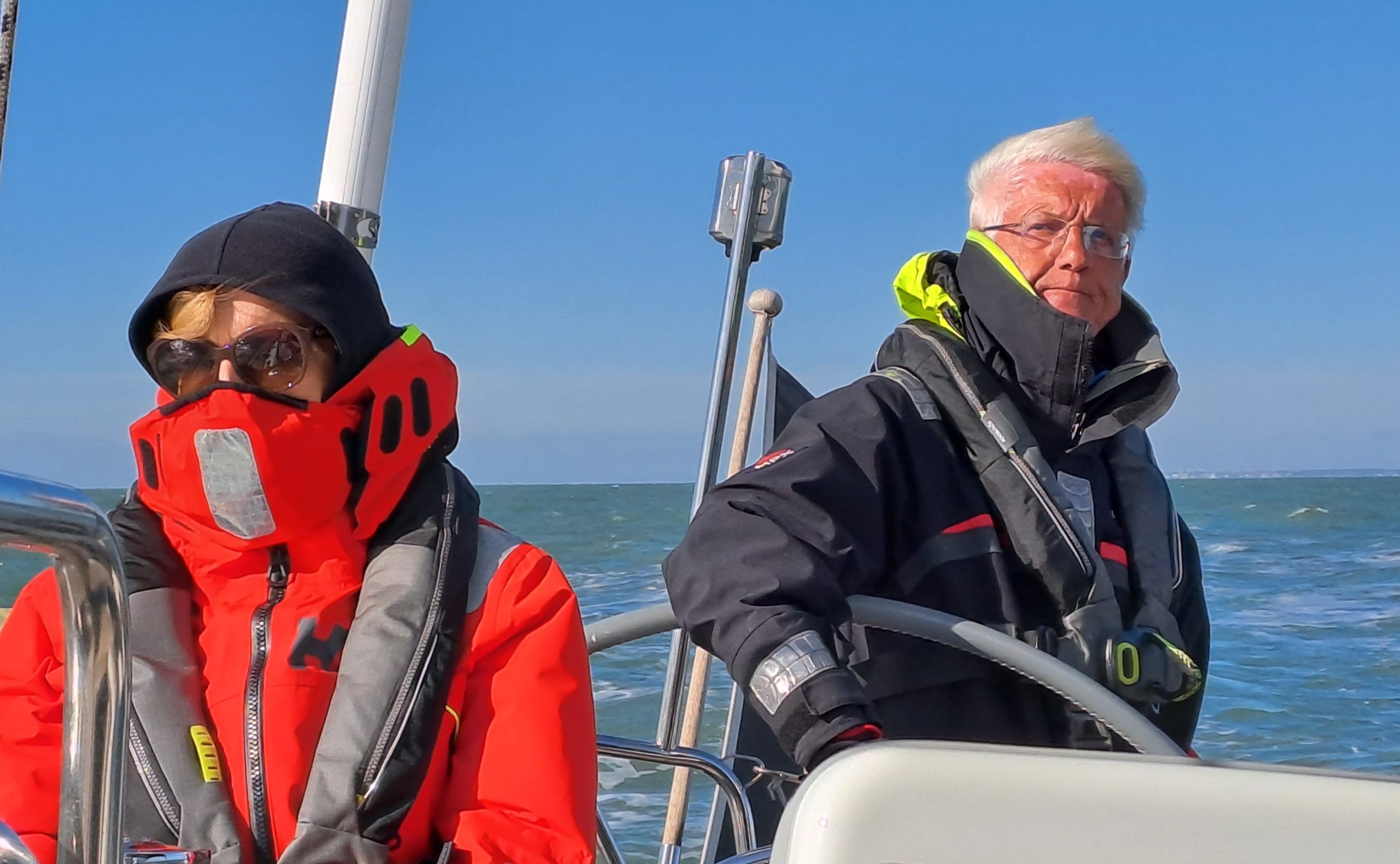
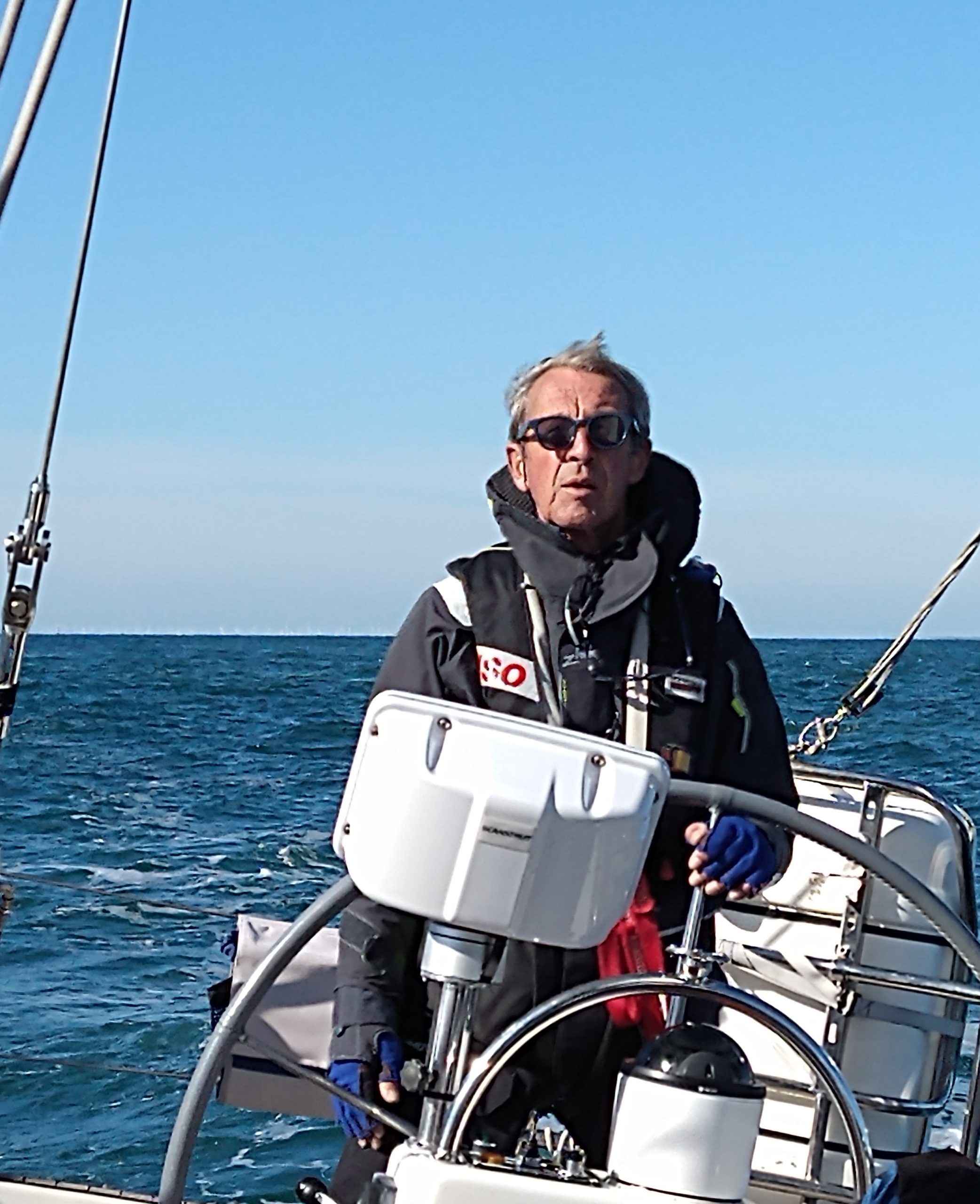
Leaving the Ostend home port at 6:00am, i.e. the day before the lock and mooring to the waiting pontoon. It will be a sailing breakfast! We’re enjoying it: with just over 20 knots of south-west wind, we go 8 knots over ground to the Sandettie buoy. One reef in the mainsail and the genoa also slightly reduced, makes for fast and comfortable sailing!
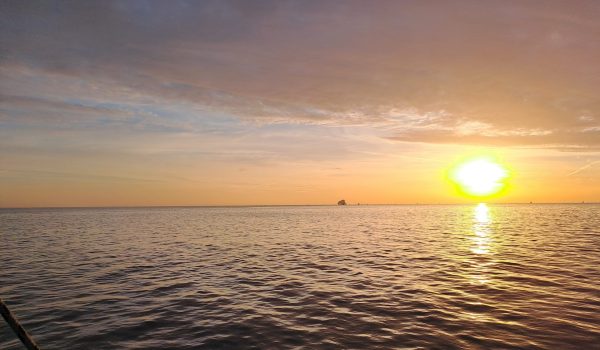
Some 9 hours later, after a quiet crossing of the Traffic Separation System (TSS, the ship’s motorway), we sail into the estuary. We make a turn at Margate, watching out for wind farms and professional activity, with the VHF radio on the right traffic channel.
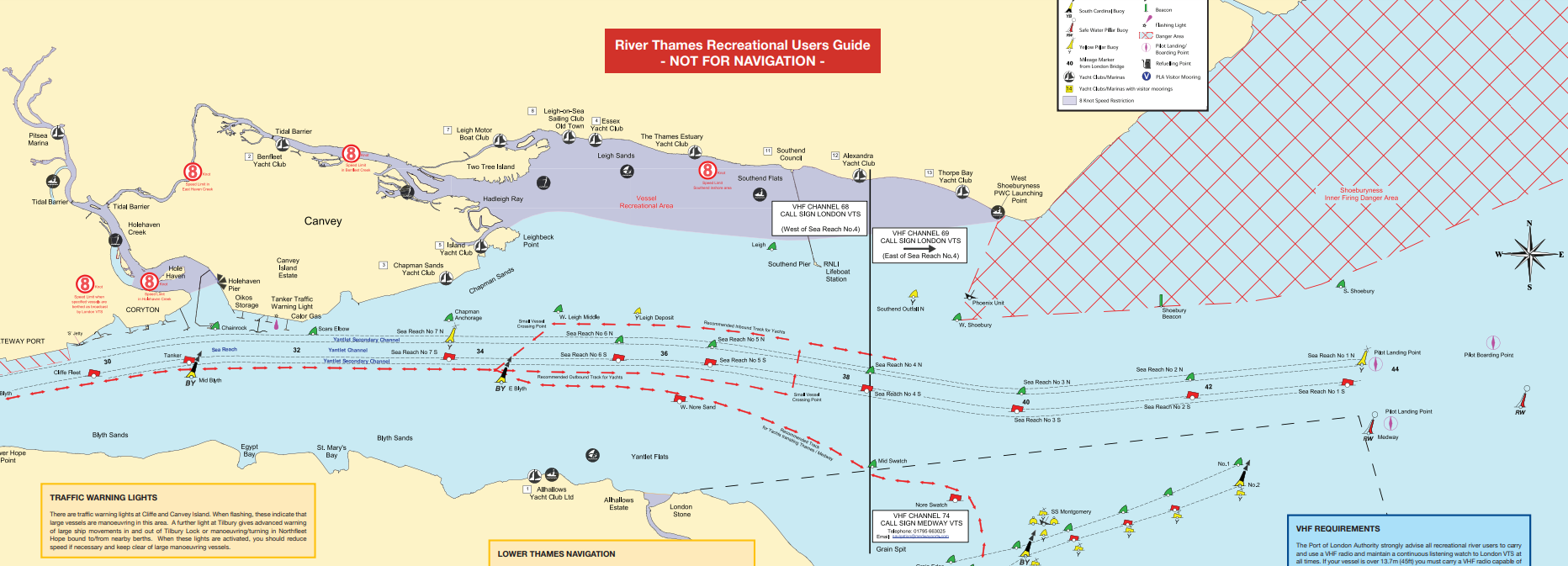
The ‘Port of London Authority’ has a section on its extensive website for pleasure cruising with a very clear description of how to sail up the Thames. In addition to boating instructions, sailing routes, buoys, ports, places of interest, details and telephone numbers of marinas are listed.
Port of London guide
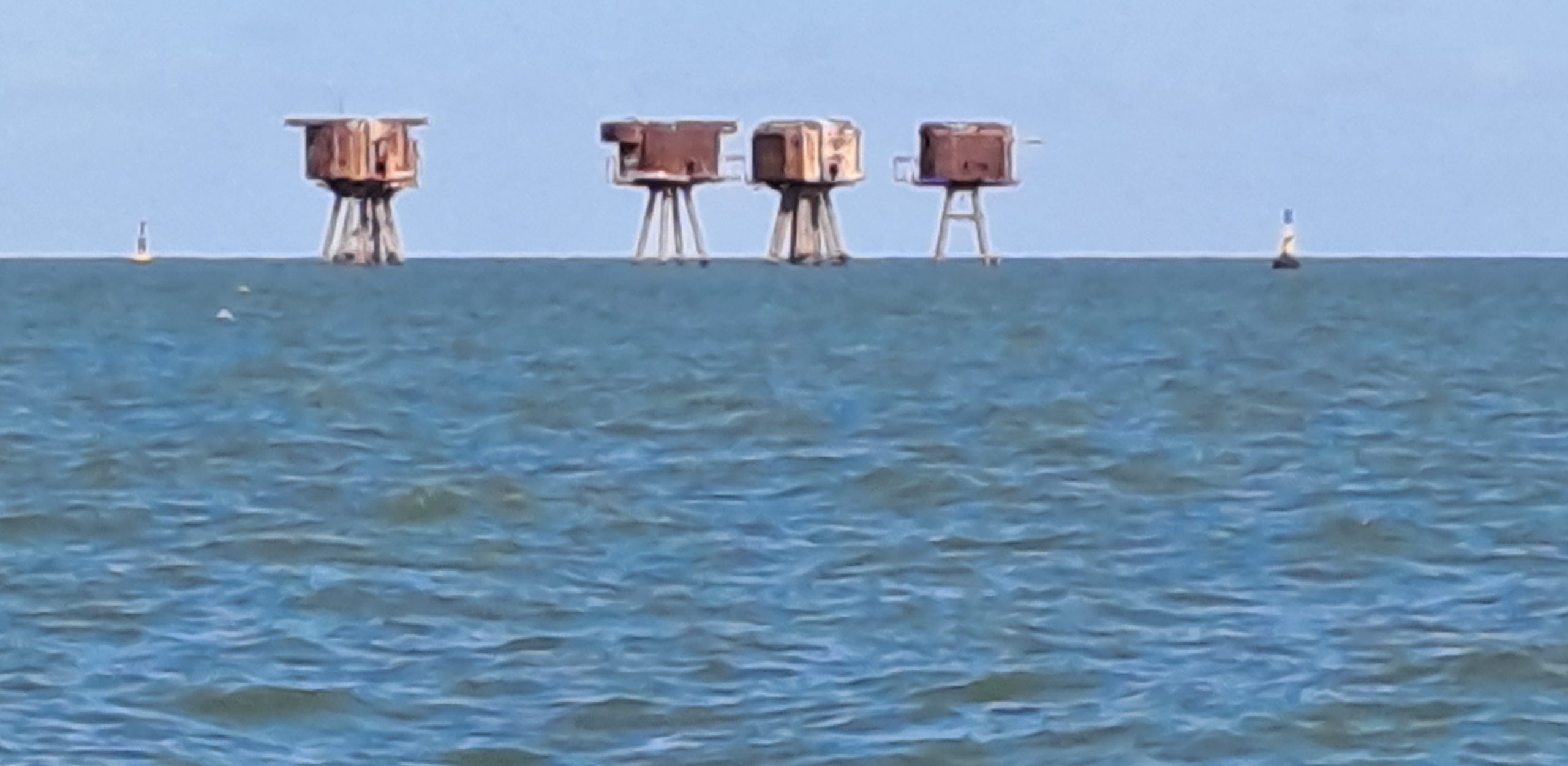
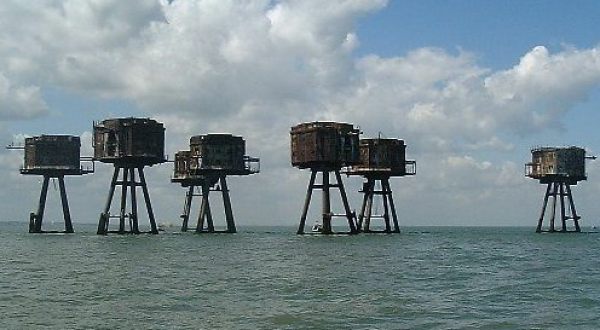
We see strange creatures keeping watch in the estuary: Star-Wars – like constructions! The Red Sand Forts are a series of seven interconnected forts on a sandbank in the Thames estuary. The forts belong to the Maunsell forts (named after architect Guy Maunsell). They served to defend the river and London from German bombers and Schnellbote and to protect Allied convoys. Now they remain stark ghostly figures from World War II.
At the Medway buoy, we turn port to sail up the river of the same name, where Queenborough awaits. We do so via a clearly defined channel, which is just as well, because to starboard we see a circle of danger buoys and half-decayed masts sticking out.
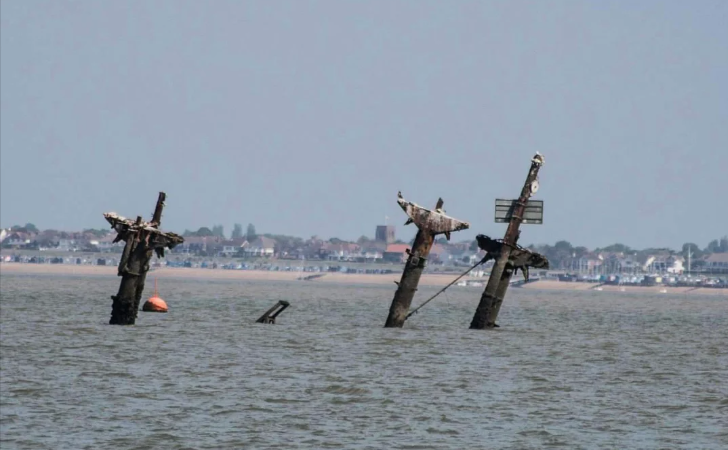
It is the wreck of the SS Richard Montgomery an American Liberty ship that broke in half at the end of World War II, after running aground on a sandbank. Nothing special, but the ship was packed with ammunition (7,000 tonnes) of which some 1,400 tonnes of highly explosive cargo still lies in and around the wreck. Experts engaged in fierce polemics about the imminent danger of an explosion. The most frightening predictions speak of a 3,000-metre water and debris column, a 5-metre tsunami that would destroy the city and port of Sheerness, a tidal wave that would threaten London and cause flooding… No one dares to initiate a salvage operation (even though, according to experts, it is necessary) and we remain very cautious between the ordered buoys…
It’s not far sailing, after Queenborough Spit buoy a short way up the River Swale, we can moor around 9pm and seek out a local pub.
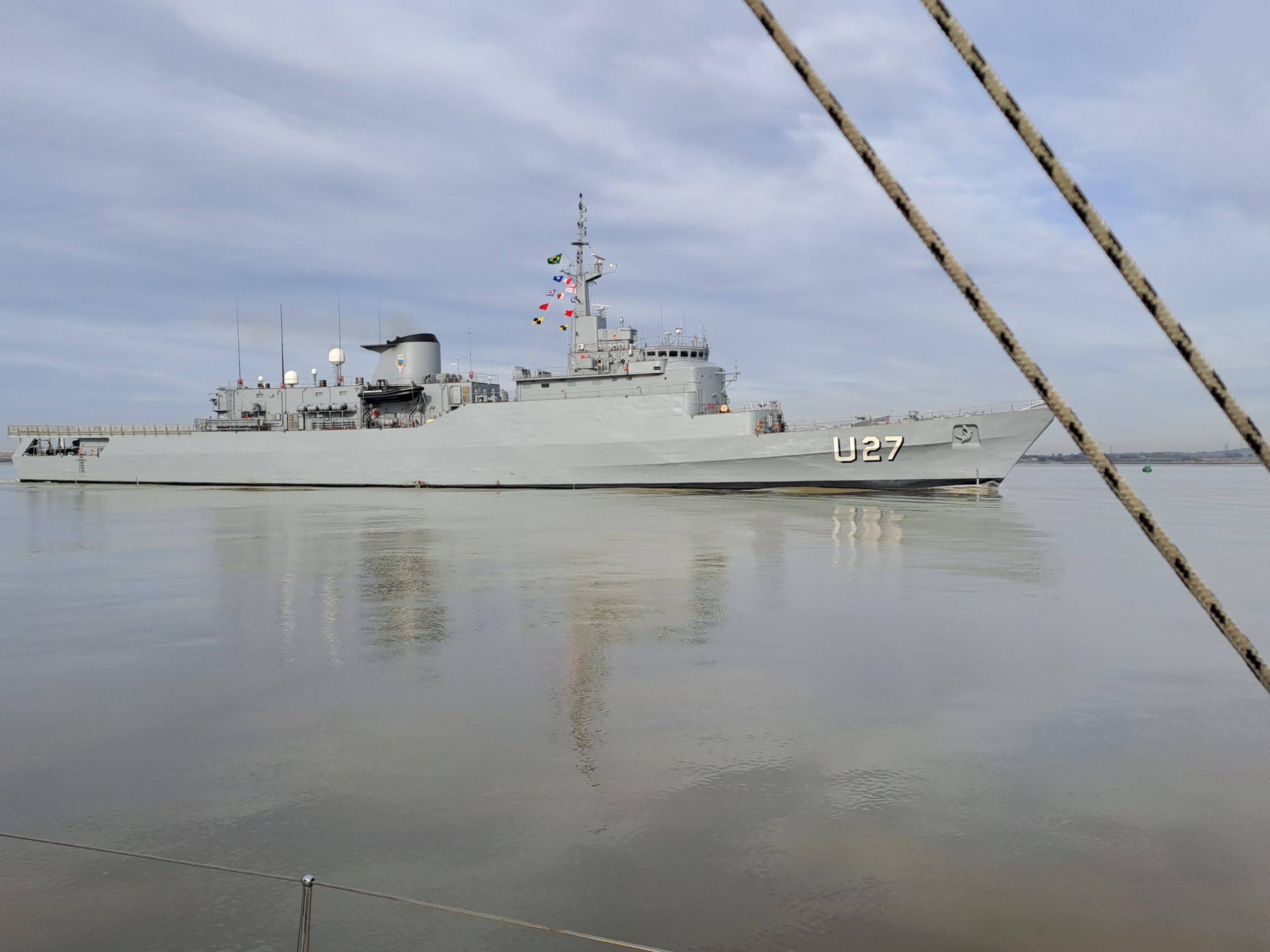
Getting up early to sail up the Thames at low tide. Leaving at 7:00, we have current for most of the trip. We are in the heart of London shortly after noon.
This time, we turn west before the nasty wreck and round the ‘Nore Swatch’ port buoy to merge alongside the professional channel (recommended for yachts). First you follow it on the port side, further on you cross over and continue on the starboard side.
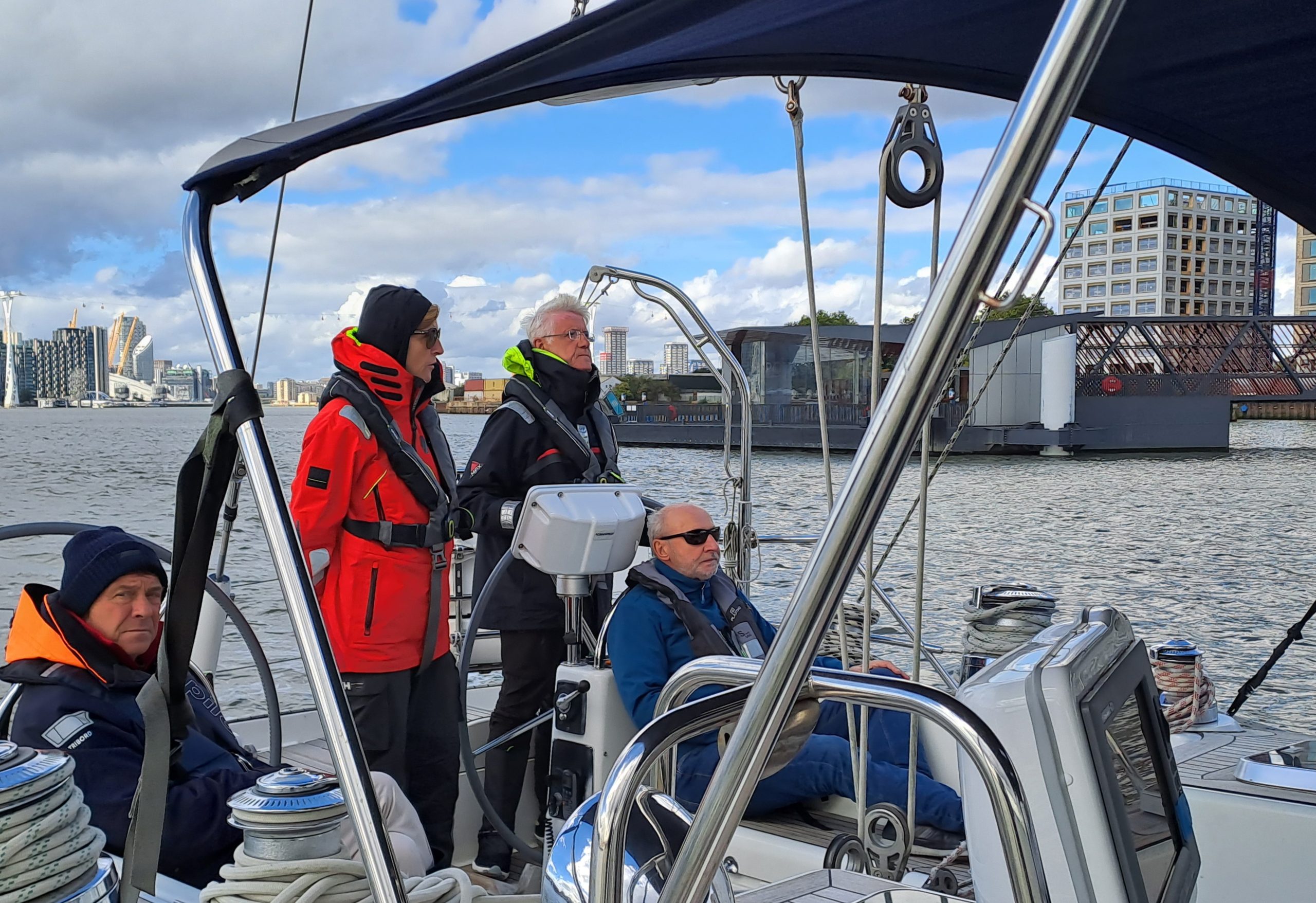
It’s watch out for heavy freight traffic, because after an initial section of flat landscape, the industrial stretch begins, which lasts for quite a while. Along the stream, there is a series of jetties and cranes where large ocean liners get or unload their cargoes. Along the way, there are industrial ports in every inlet. Especially at Tilbury, it is a busy and narrow waterway. On the VHF radio, we hear regularly warnings for anyone threatening to enter the route of the ocean-going ships. We do not need these as everyone is watching and does not want to miss anything from the trip!
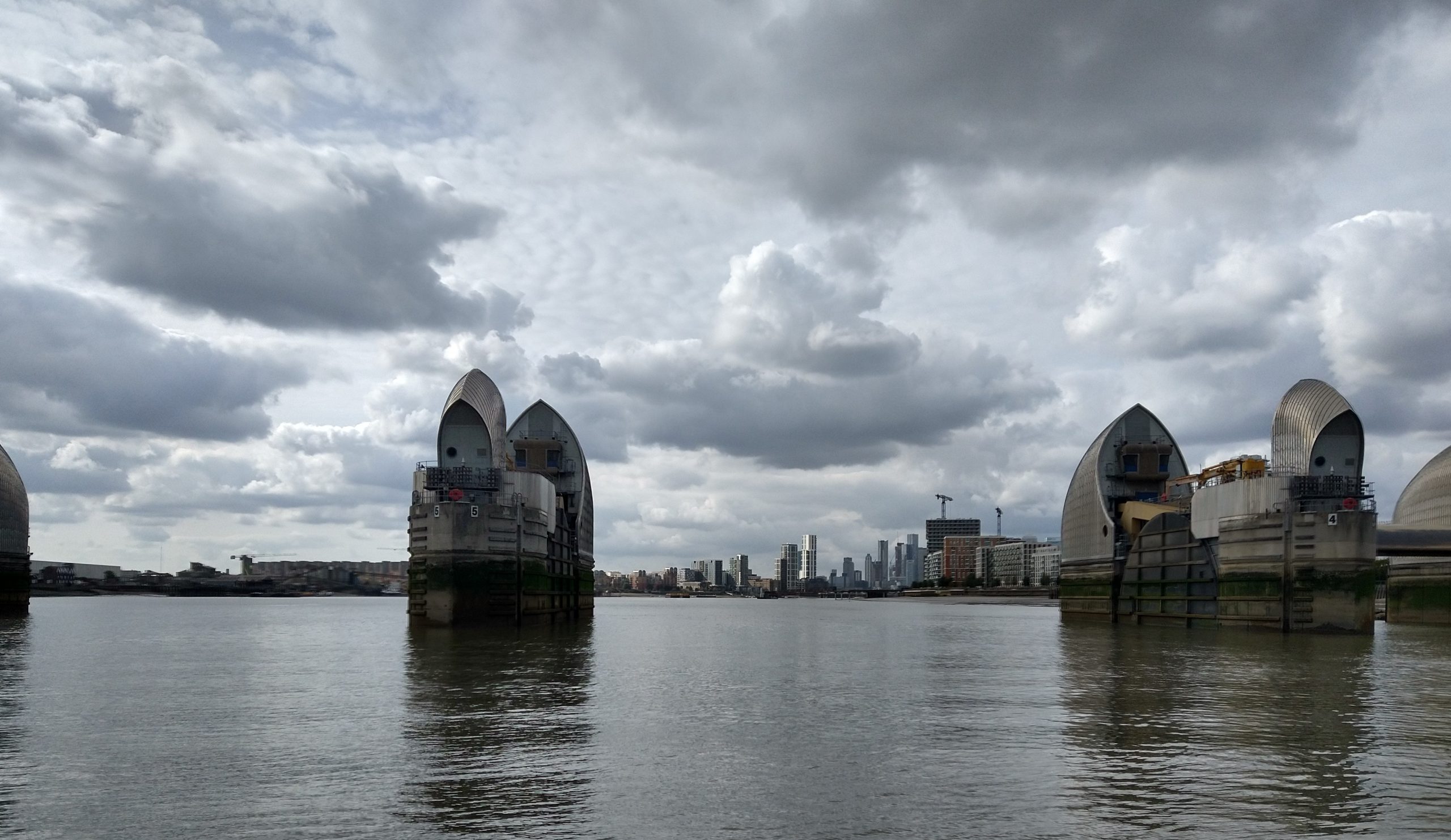
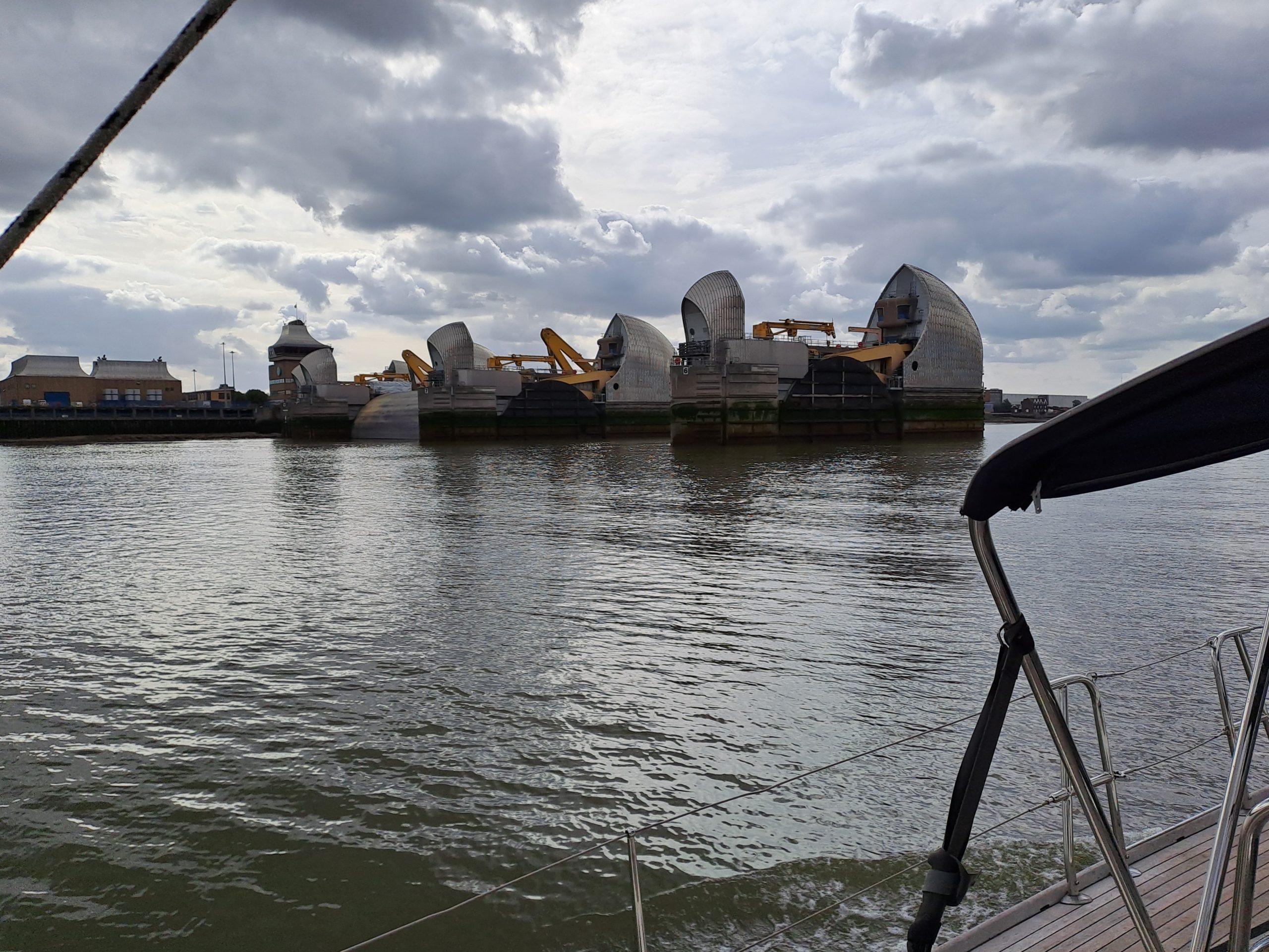
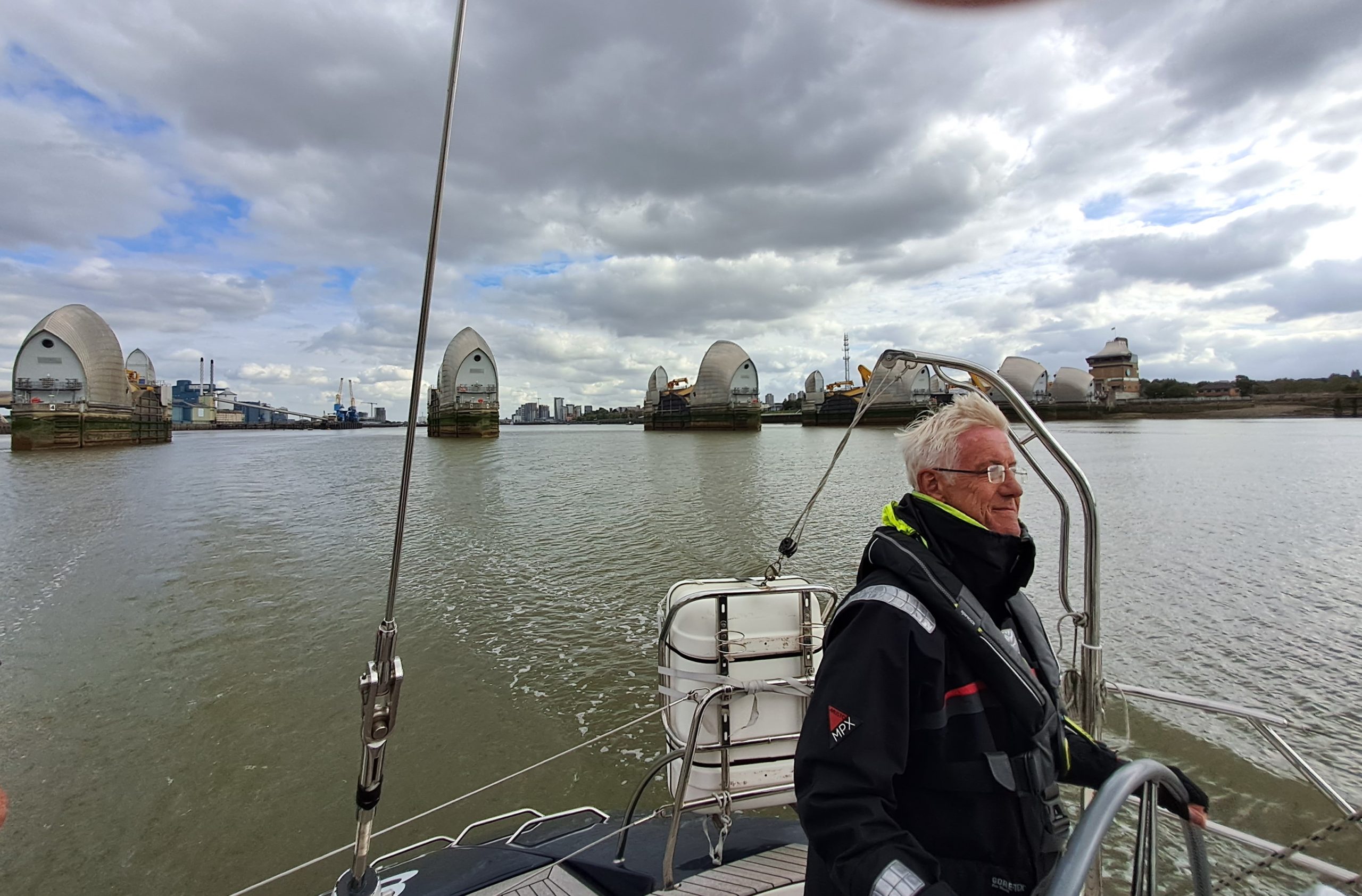
It is a very winding and flowing stretch. Meanwhile, we approach a first major ‘landmark’: the ‘Thames Tidal Barrier’. This structure is supposed to protect London and its surroundings during the 1000-year storm, high water levels and storm surges. Paying attention to take the right ‘gate’ for recreational boating and listening out on the right VHF channel is the message.
The construction looks strange, with the 10 steel gates, the structure spans 520 metres and can be ‘dammed’ by the current. Each main gate weighs 3,300 tonnes and when raised, the main gates are as high as a five-storey building and as wide as the opening of Tower Bridge. The metal protective caps lend a certain beauty to the structure reminiscent of helmets for the city’s guards.
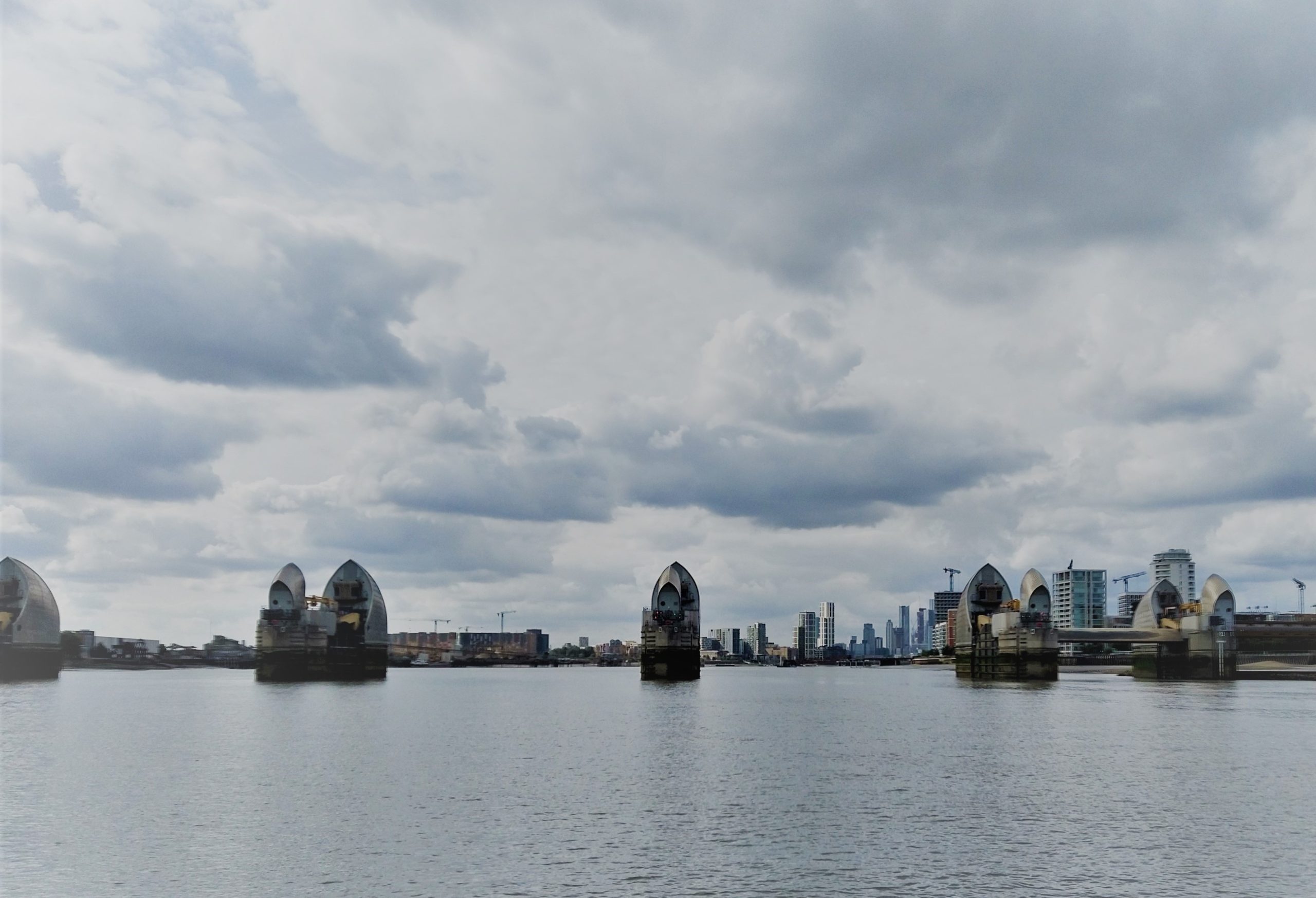
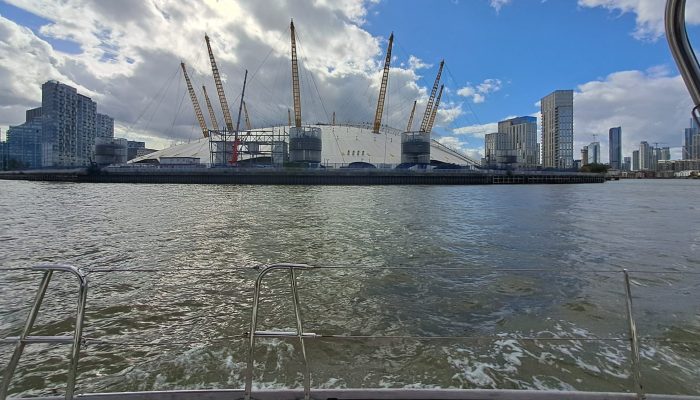
We are approaching the city!
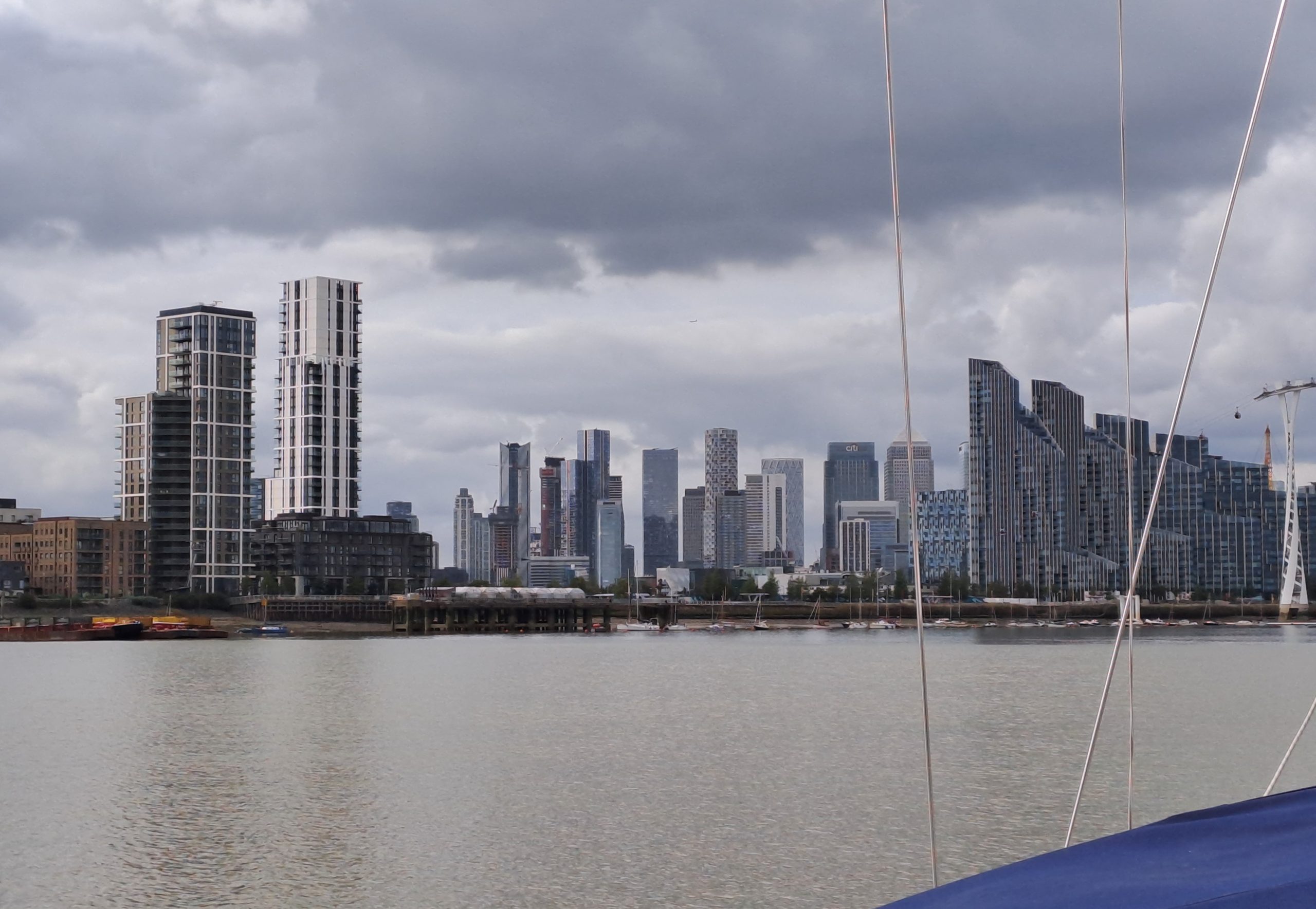
The Tidal Barrier is an immediate sign that we are approaching the city. The high-rise buildings around the stream highlight the busy economic activity in this metropolis.
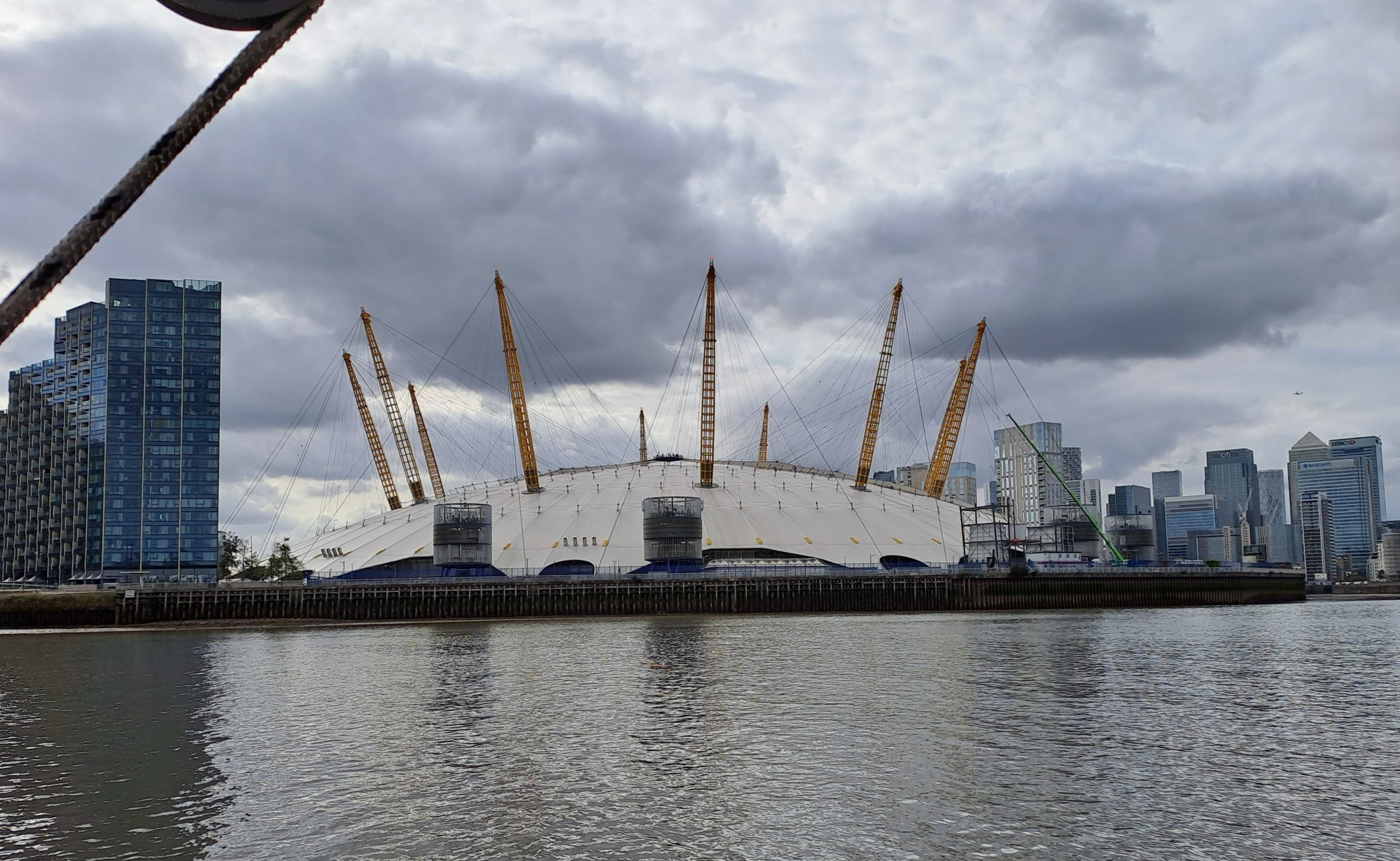
At the point of a big bend in the stream, we see the ‘Millennium Dome’. The spherical white sphere with 12 yellow support towers 100 metres high. One for each hour of the clock, reflecting the role of Greenwich Mean Time.
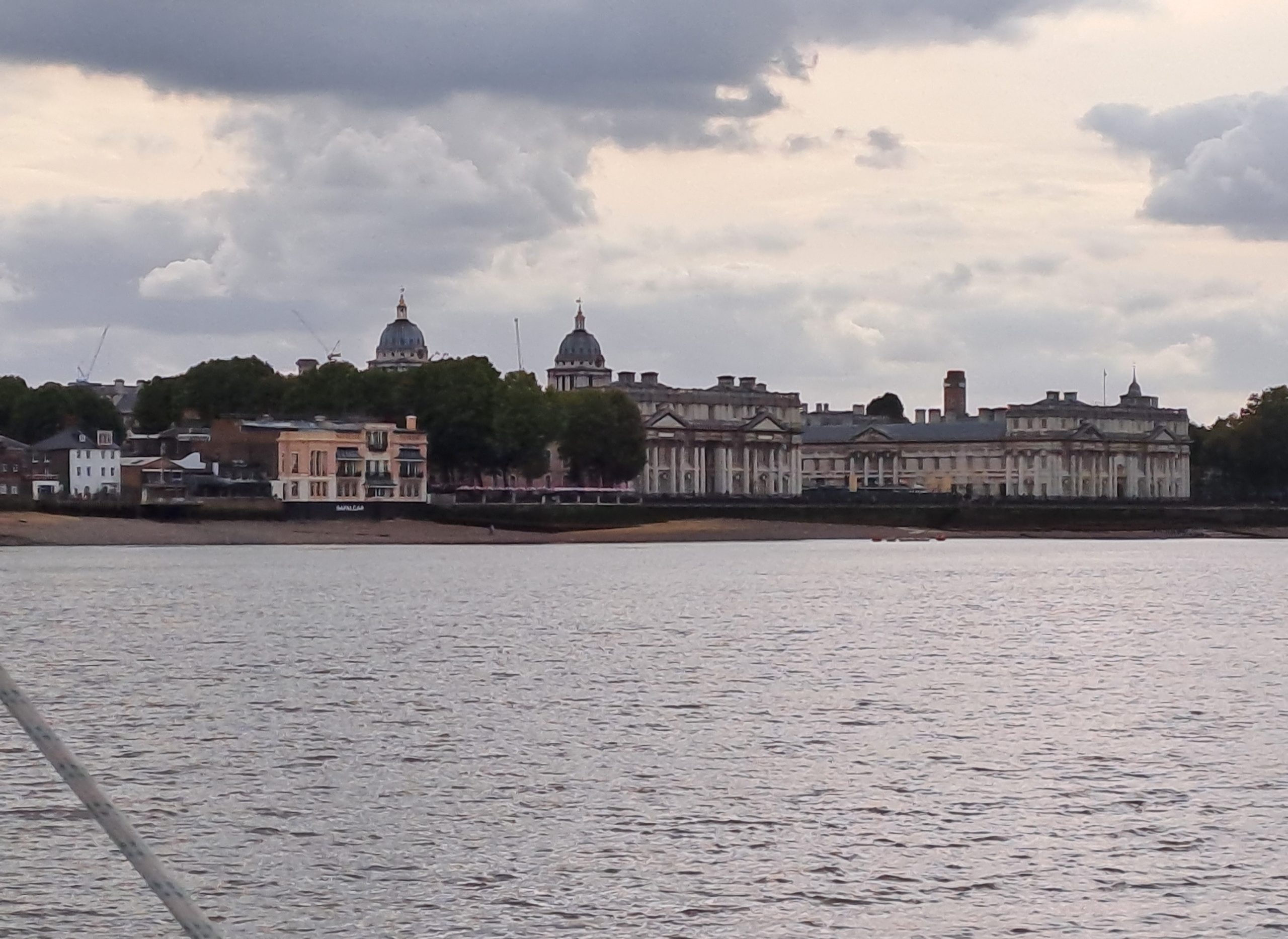
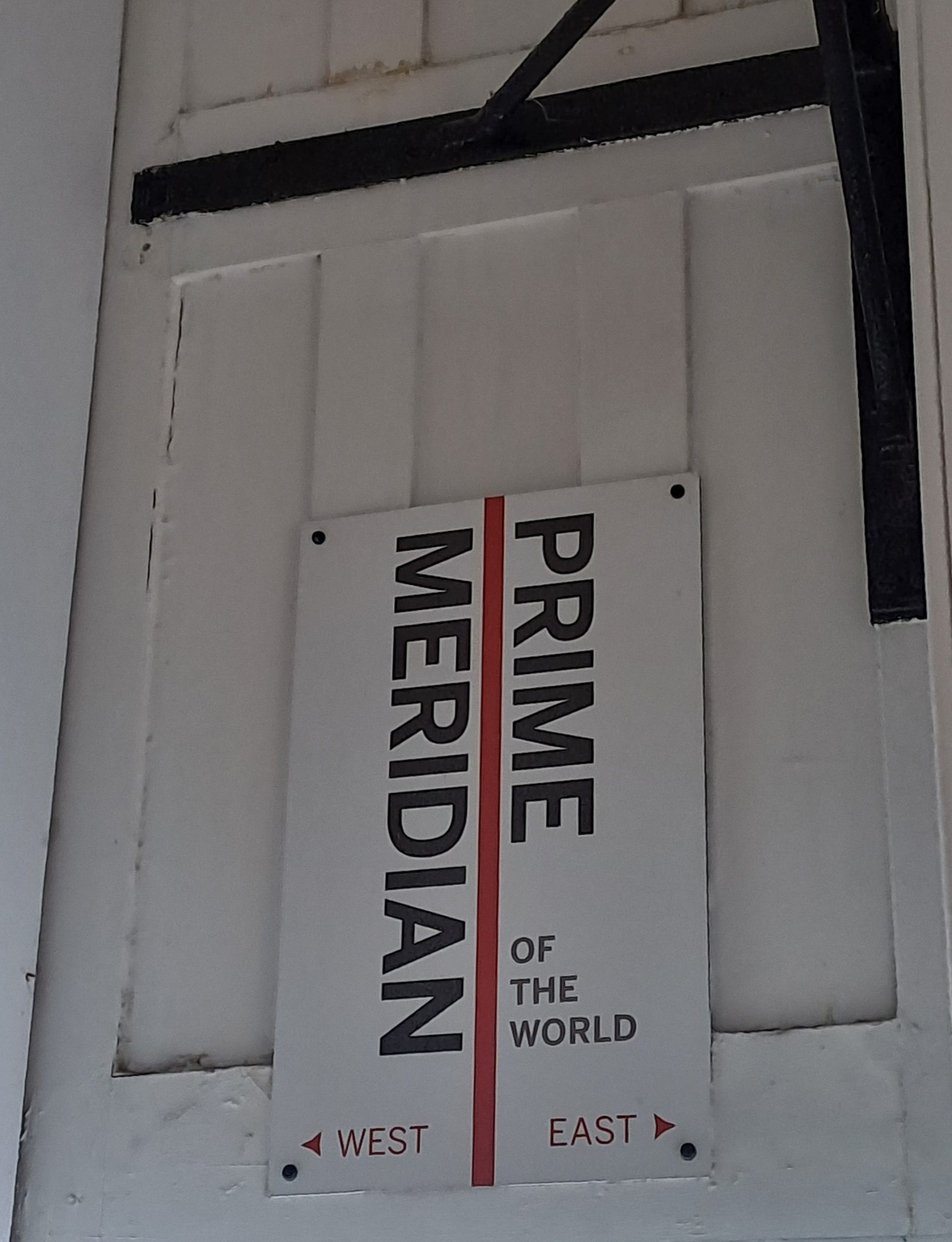
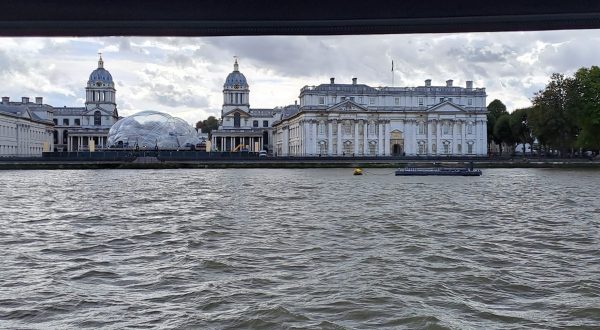
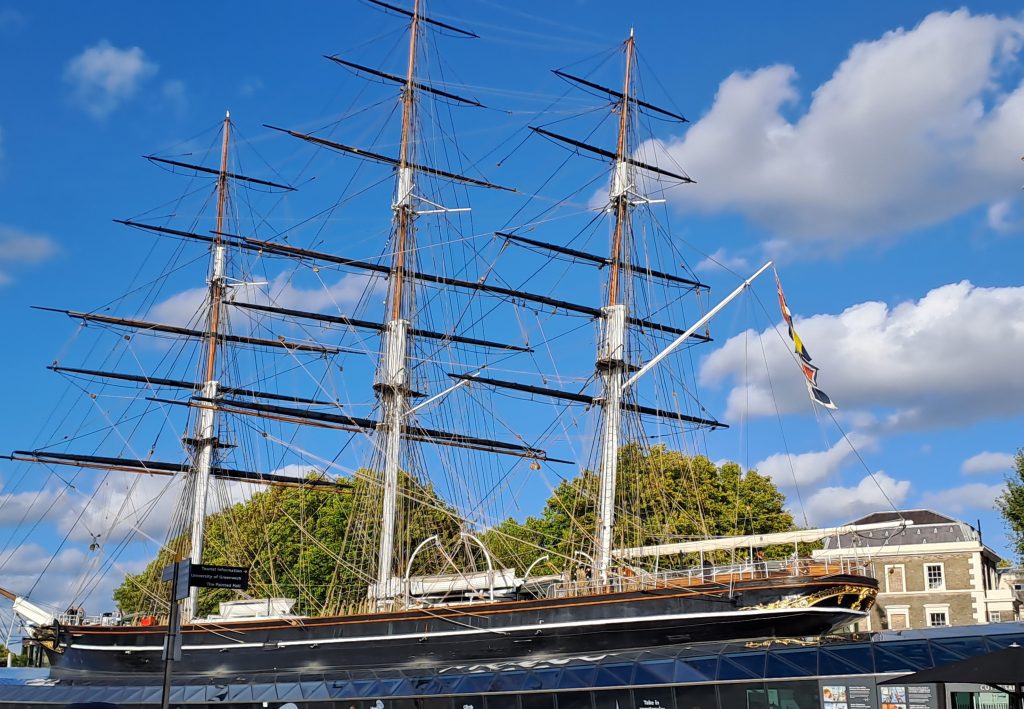
Greenwich is the next prominent landmark on the port side. The historic buildings of the ‘Naval College’ stand out in contrast to the ever-increasing modern high-rises . Remember: we are sailing through the prime meridian and are as of now in the Western Hemisphere. We see the silhouette of the museum ship the Cutty Sark, perhaps a tourist destination for sailors?
Tensely we follow the meanders of the stream, along the renovated quays… when will we see the final destination ?
For the Elise, that is St Katharine Dock Marina, uniquely located. There are several marinas on the Thames, most accessible 2 hours before to 2 hours after high tide. The tide drop (difference between high and low tide) can reach about 7 metres at London Bridge! Moreover, there are several entry-barriers, which means we don’t have much choice.
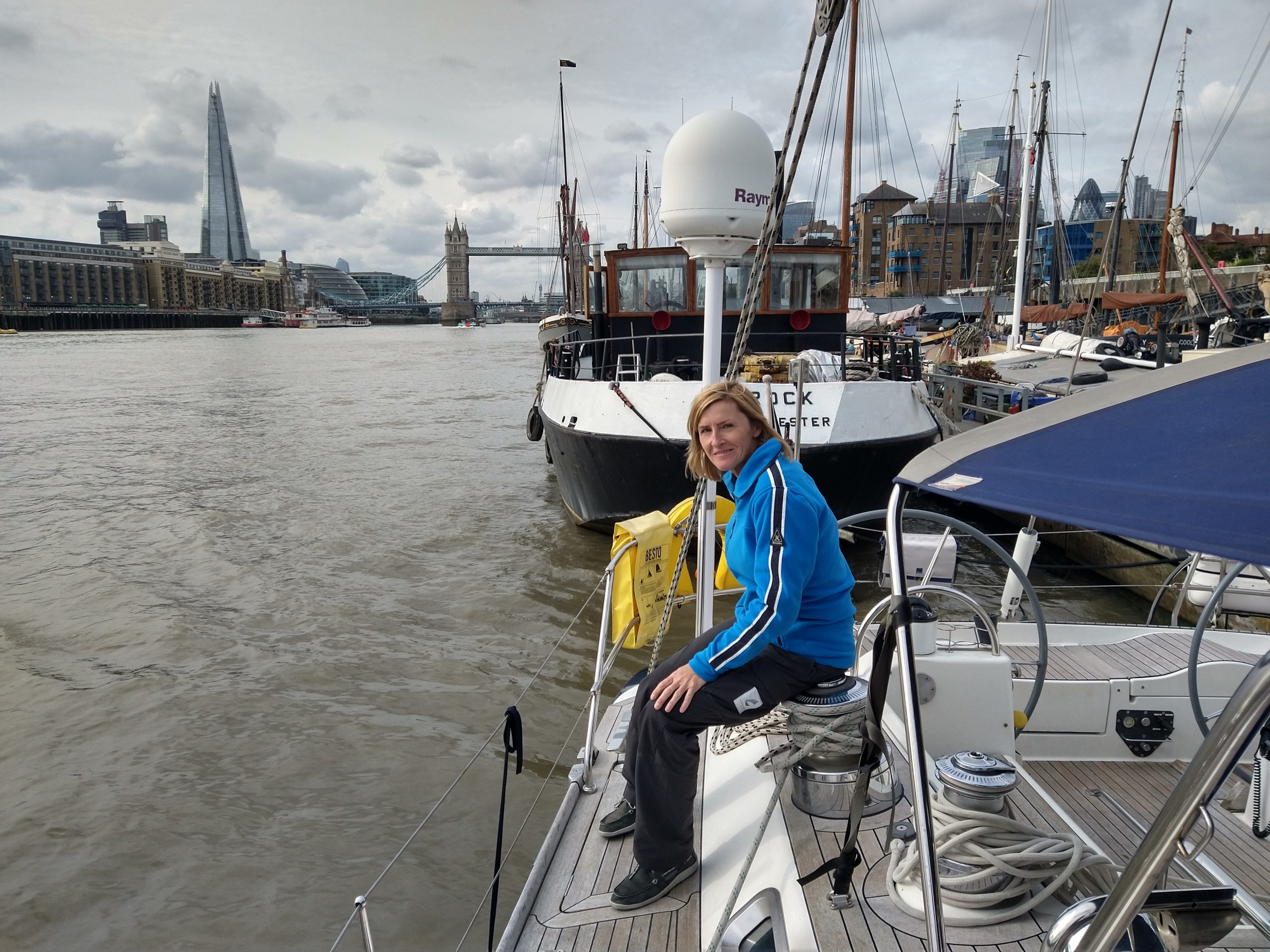
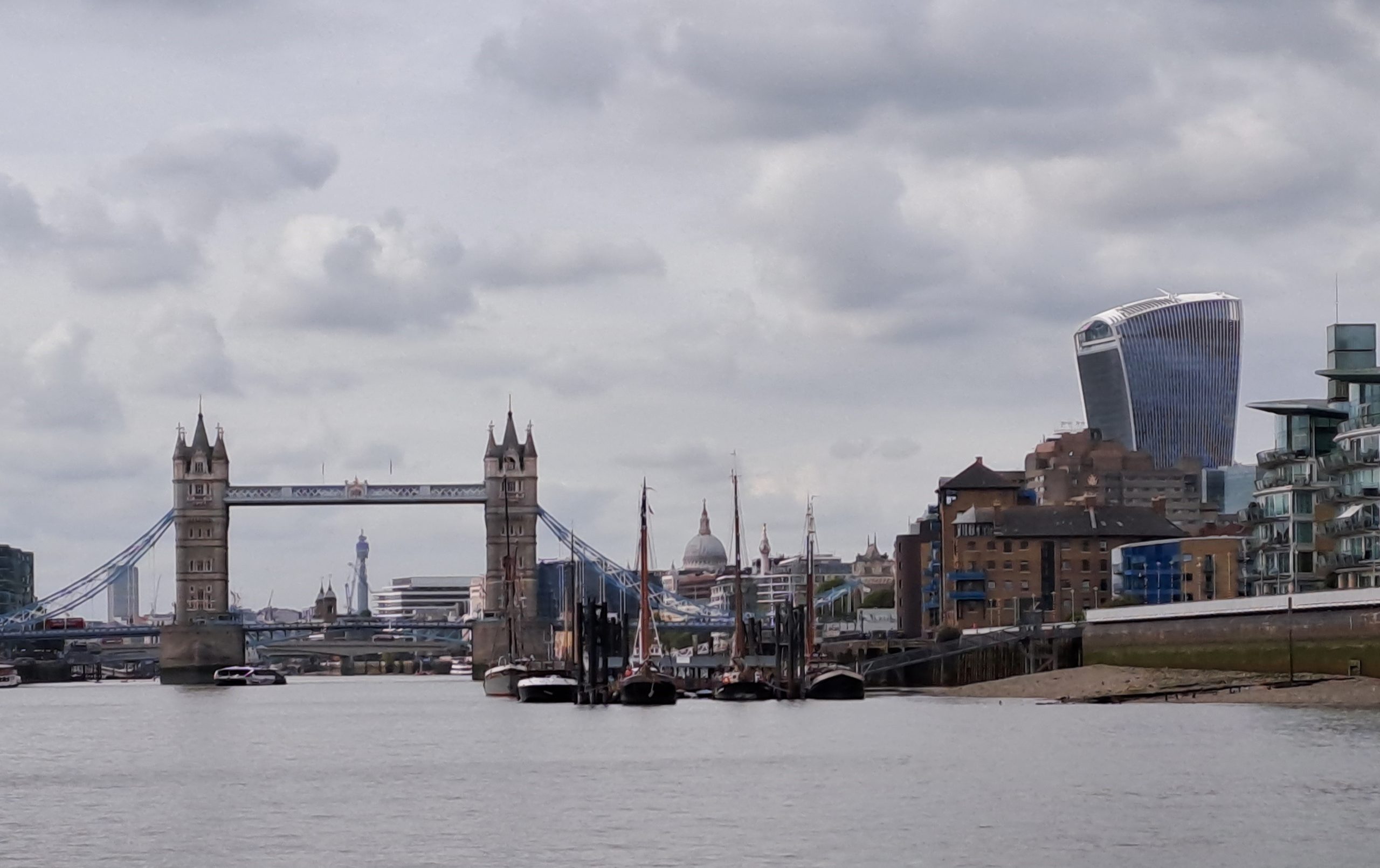
And whaaw, after a final turn we see the London skyline, prominently featuring Tower Bridge, an iconic sight that leaves no one unmoved.
We are there and able to sail into the uniquely located harbour of St Katharine Docks… mostly anyway. We are unlucky when we hear that our place has been reserved, but due to a staff shortage we can only enter tomorrow morning….
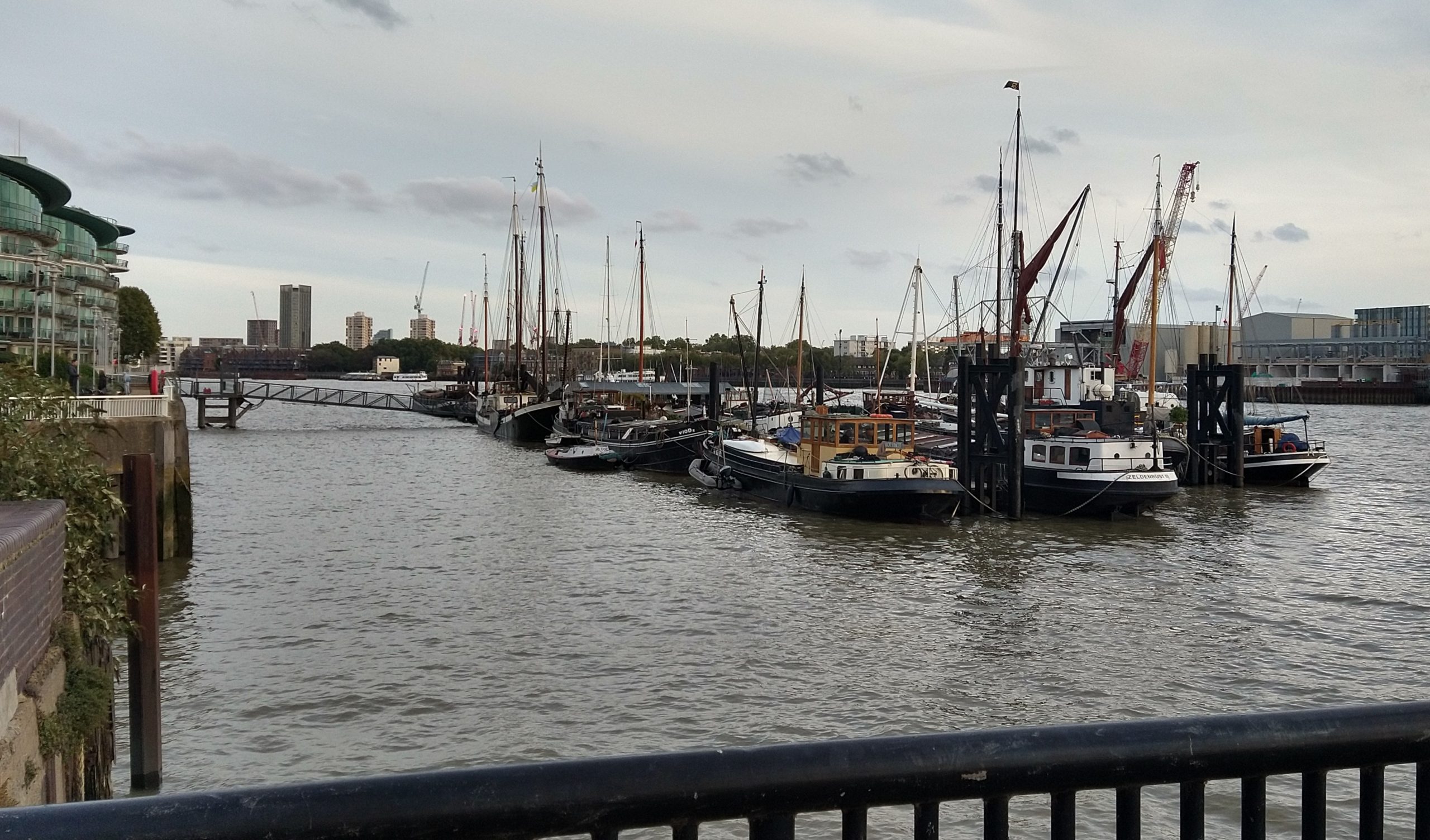
Sometimes bad luck is a bit of luck! Hilde doggedly calls all the marinas and moorings: oef, the Hermitage Community Moorings exceptionally have a mooring available for one night. Normally this marina is reserved for historic barges, one of which is travelling so we get a unique place along the stream.
From the ship, we overlook Tower Bridge, the Thames, the striking high-rise buildings, the busy ship traffic, the party boats. You cannot find a better place to watch the busy life on the river, after 10pm it gets quieter.
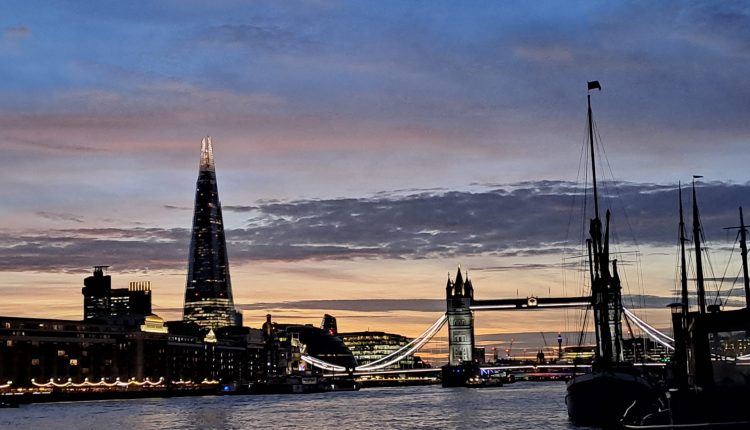
Tower Bridge at night...
There is time enough to set foot ashore for the first time and quickly explore the area. The view from the ship is so enticing that we quickly stock up on supplies to dine on board in the luxurious cockpit. It’s going to be delicious as night falls and Tower Bridge lights up the night enchantingly.
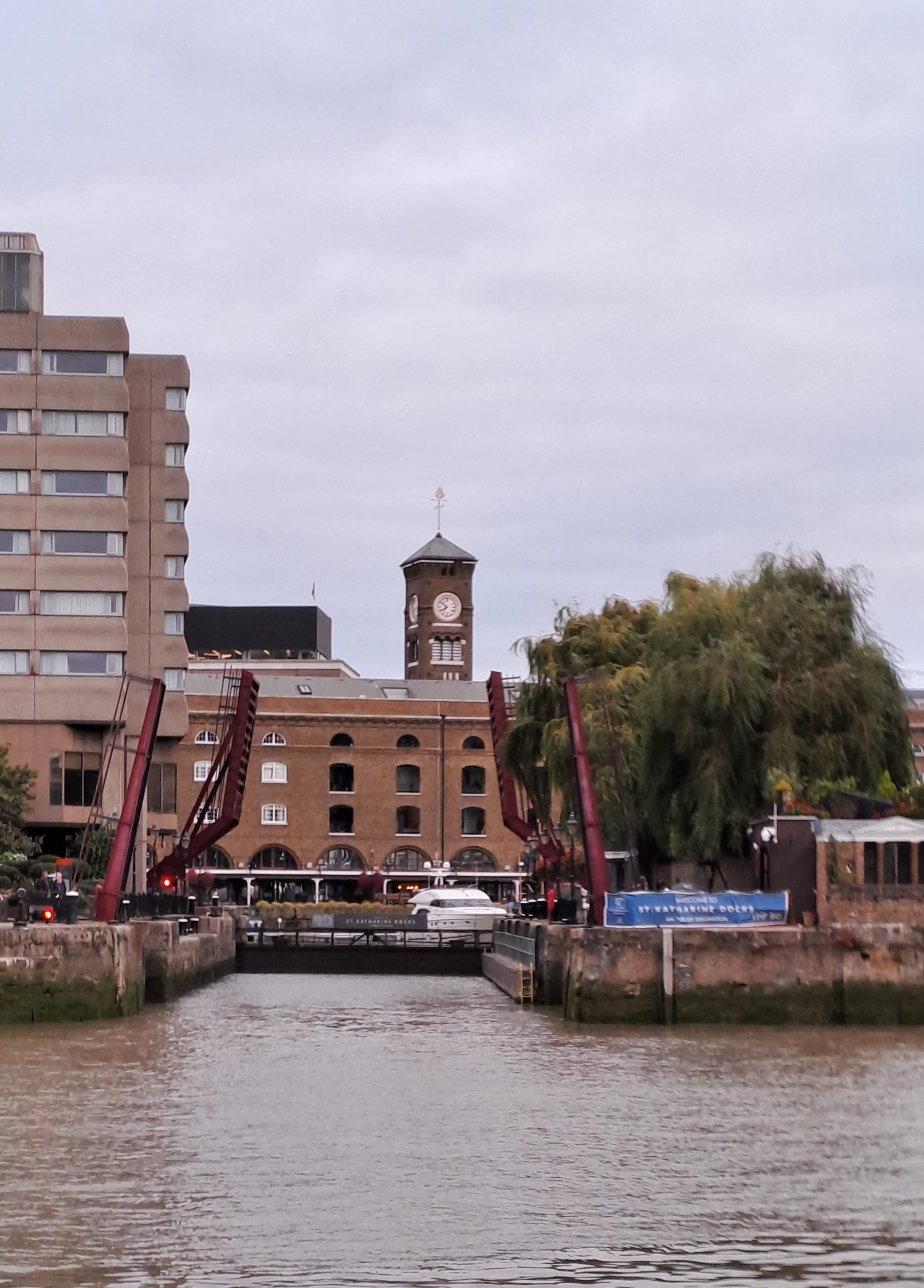
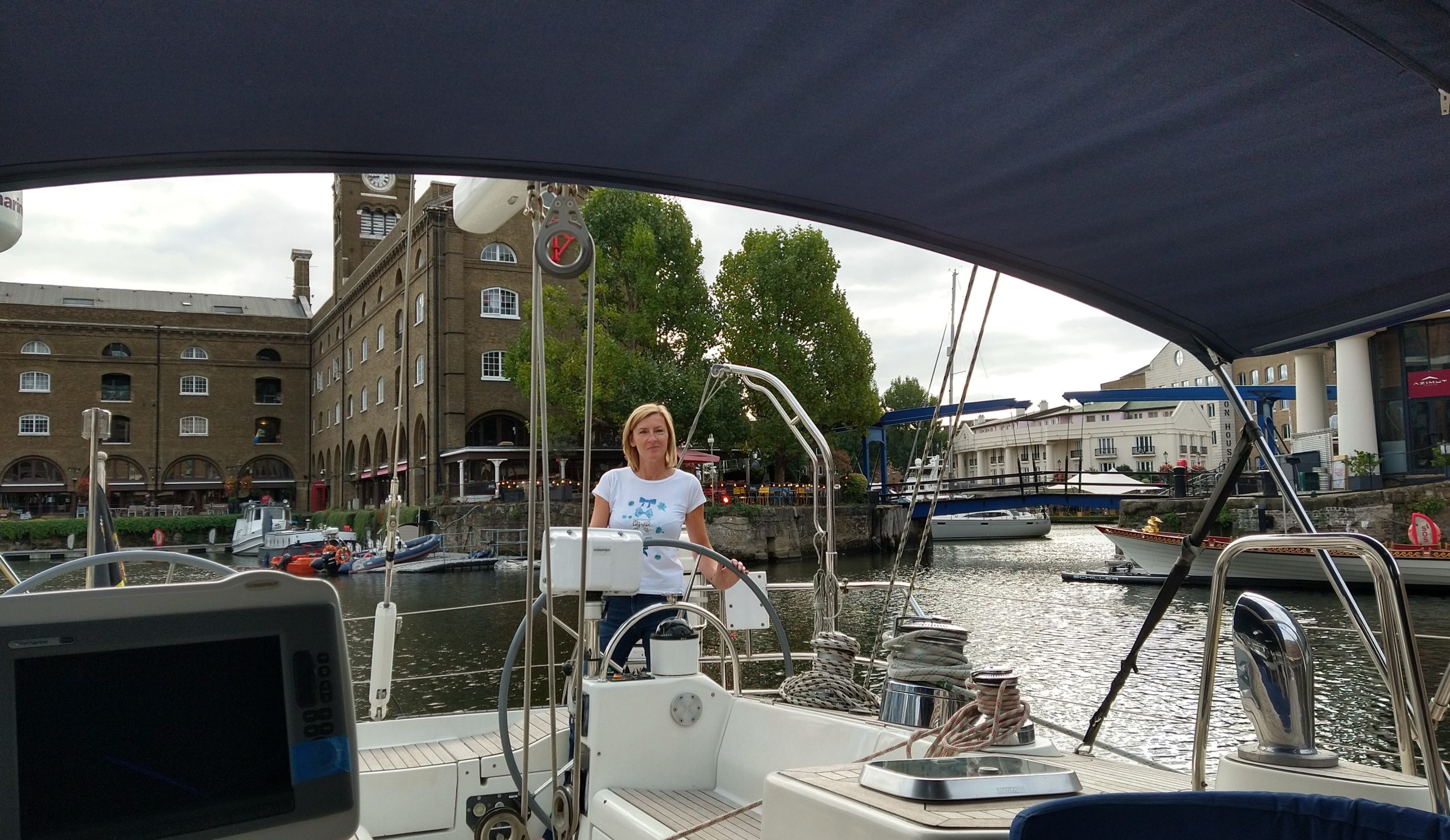
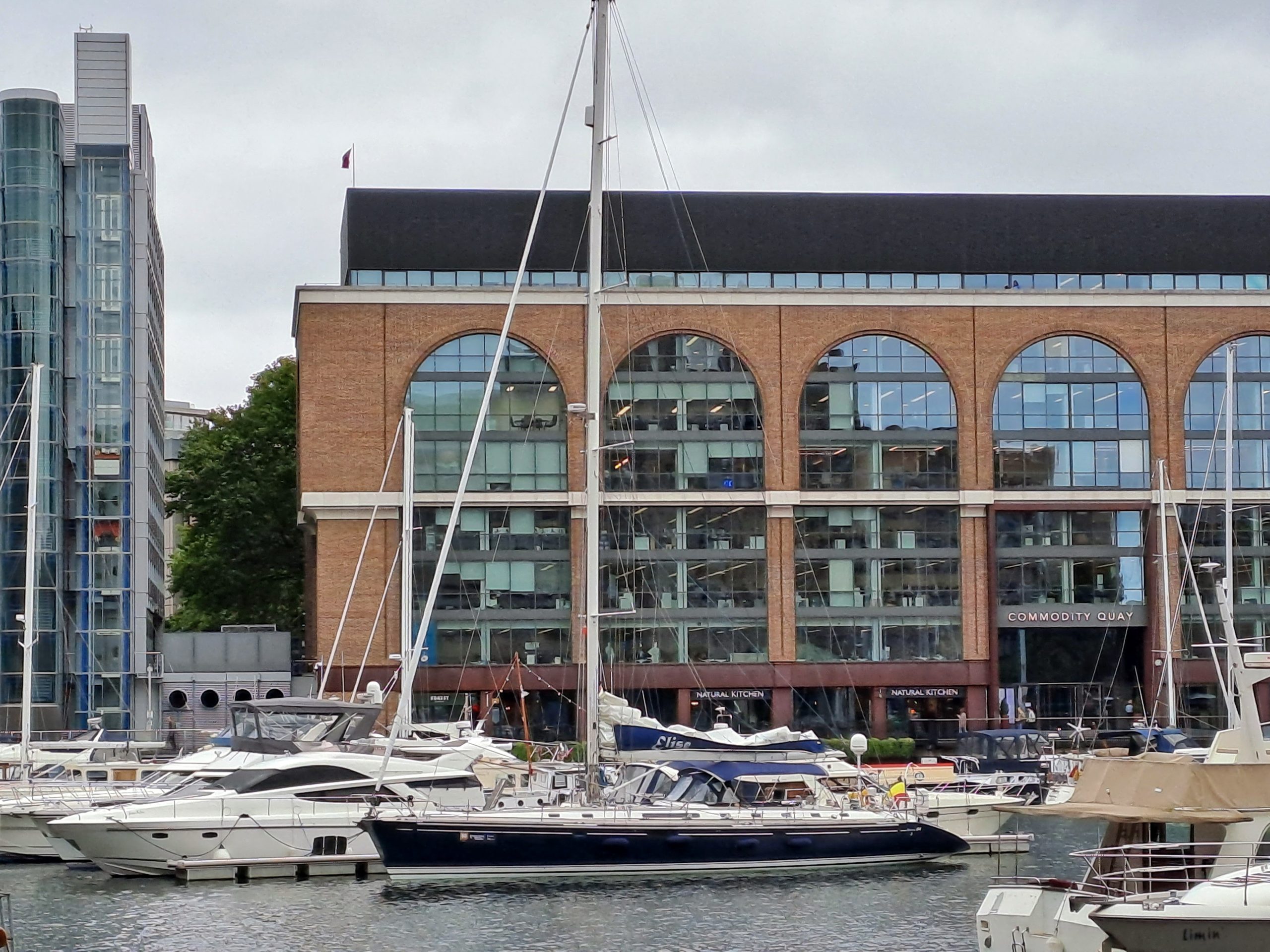
The next morning, we have to surrender our berth and sail into the Marina. That’s really just before the Tower. We are assigned a place in the basin surrounded by terraces and offices.
It is redundant and, more importantly, endless to list what you can visit and experience in London. We’ll venture two tips anyway:
- Tip 1: get around on the water taxis! Of course there’s the metro, there are the red buses and taxis run all the time. But close to the mooring, get on a water taxi that will take you on the Thames to or close to many destinations.
- Tip2: why not take a trip (by water taxi) to the Greenwich Observatory? In green surroundings, you have a small museum where the theoretical knowledge of your cruising licences is didactically explained and you can stand on the meridian… As a change, you can of course visit the Cutty Sark.
The return...
Once the tourist part of the trip is over (you’re staying at least one day, right?) we start the return journey. Again as a function of high tide, out of the lock and goodbye St Katharine Docks, Tower Bridge…London.
Even in grey weather, the current is an experience. It’s as if the sights are even more fascinating the second time around. Good watch out because with a brisk current we are constantly sailing 8-10 knots, in some areas risking a speeding ticket.
The return leaves several choices:
- If we can leave on time, we will be in the estuary four hours later and can make the jump to Ramsgate, for instance.
- For London-Ostend direct we need night sailors on board and, of course, the weather has to cooperate.
- A quiet option is again to Queenborough and home the next day, with or without a stopover in Ramsgate.
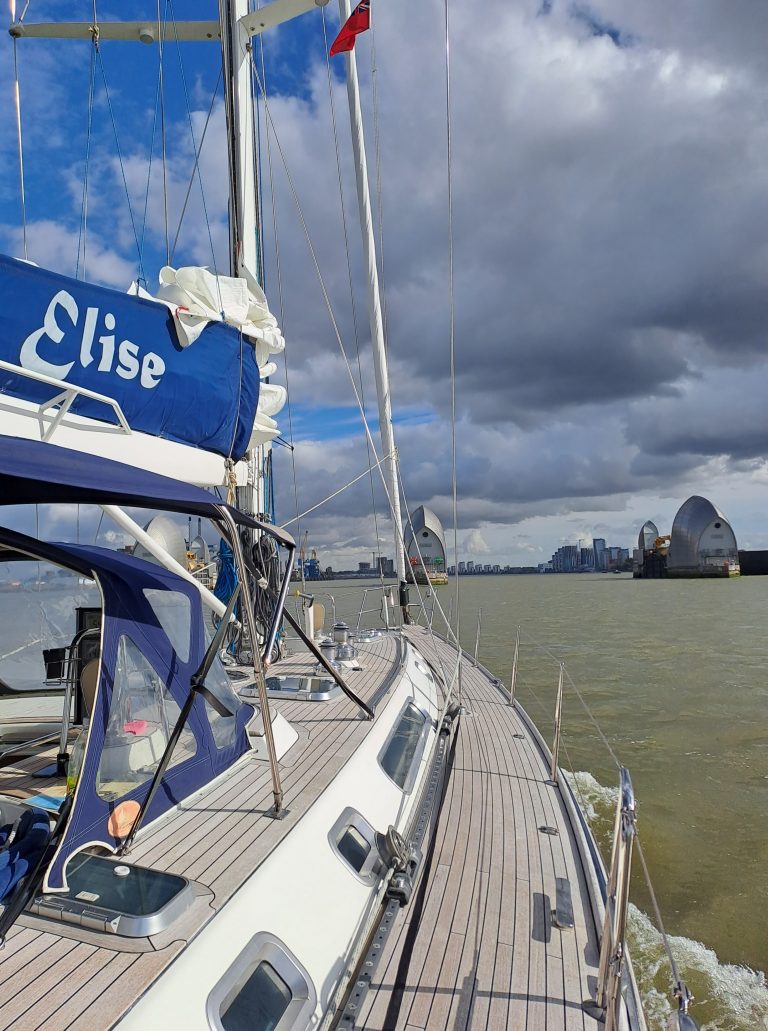
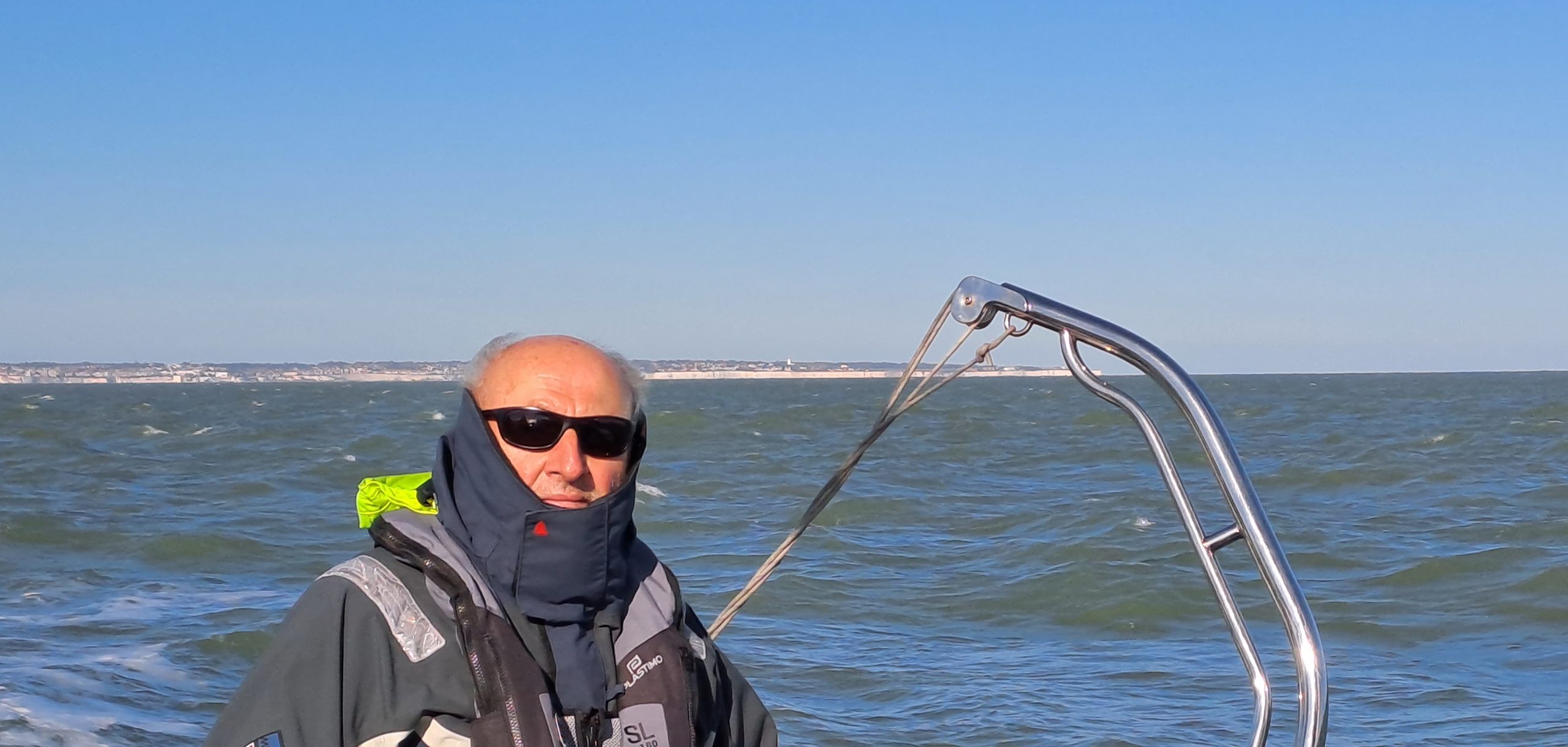
That return trip is again the real sailing experience, calculating with tides, choosing the optimal sailing course, constantly trimming the mainsail and genoa….
Sometimes the weather gods are capricious! With luck, the engine is off, we only hear the sound of the Elise cleaving the waves and feel the sailing wind in our hair.
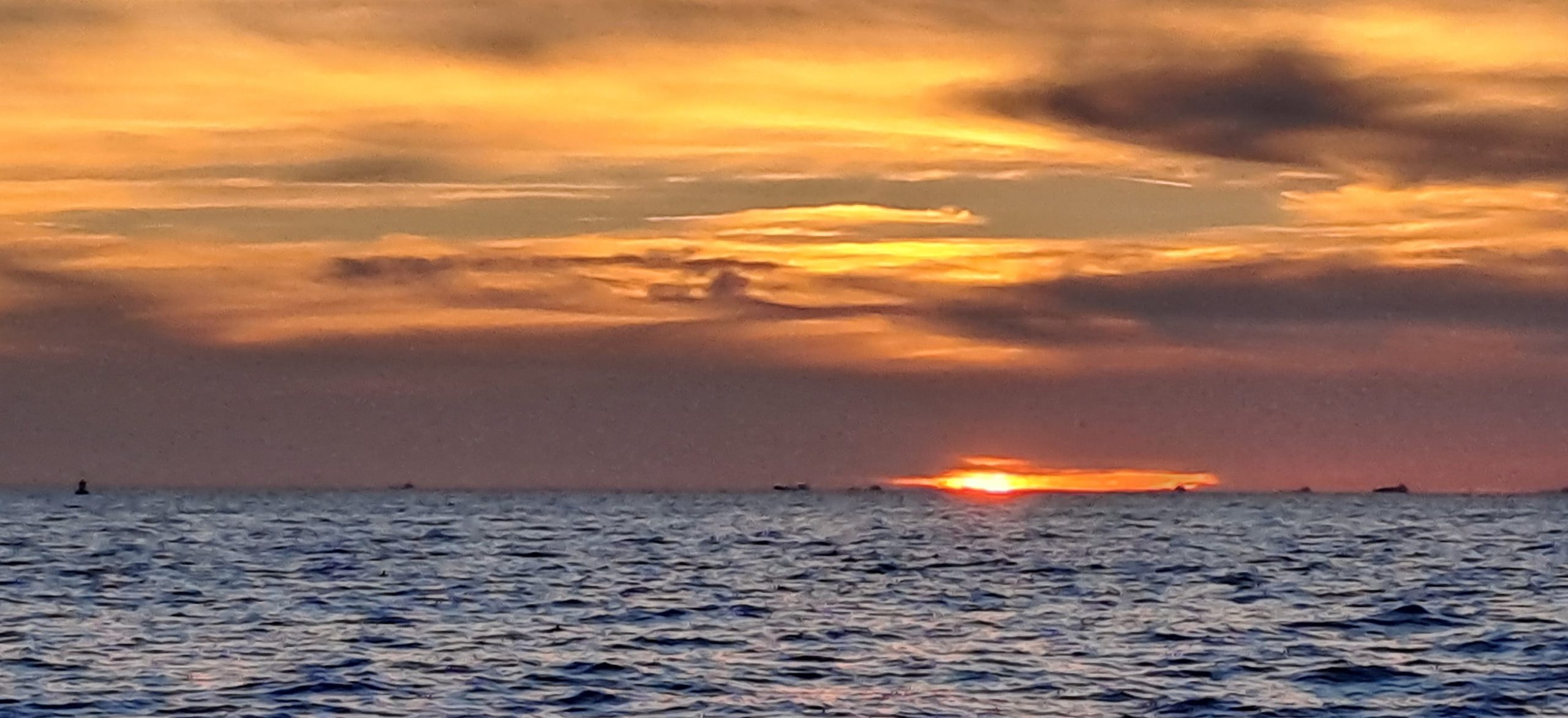
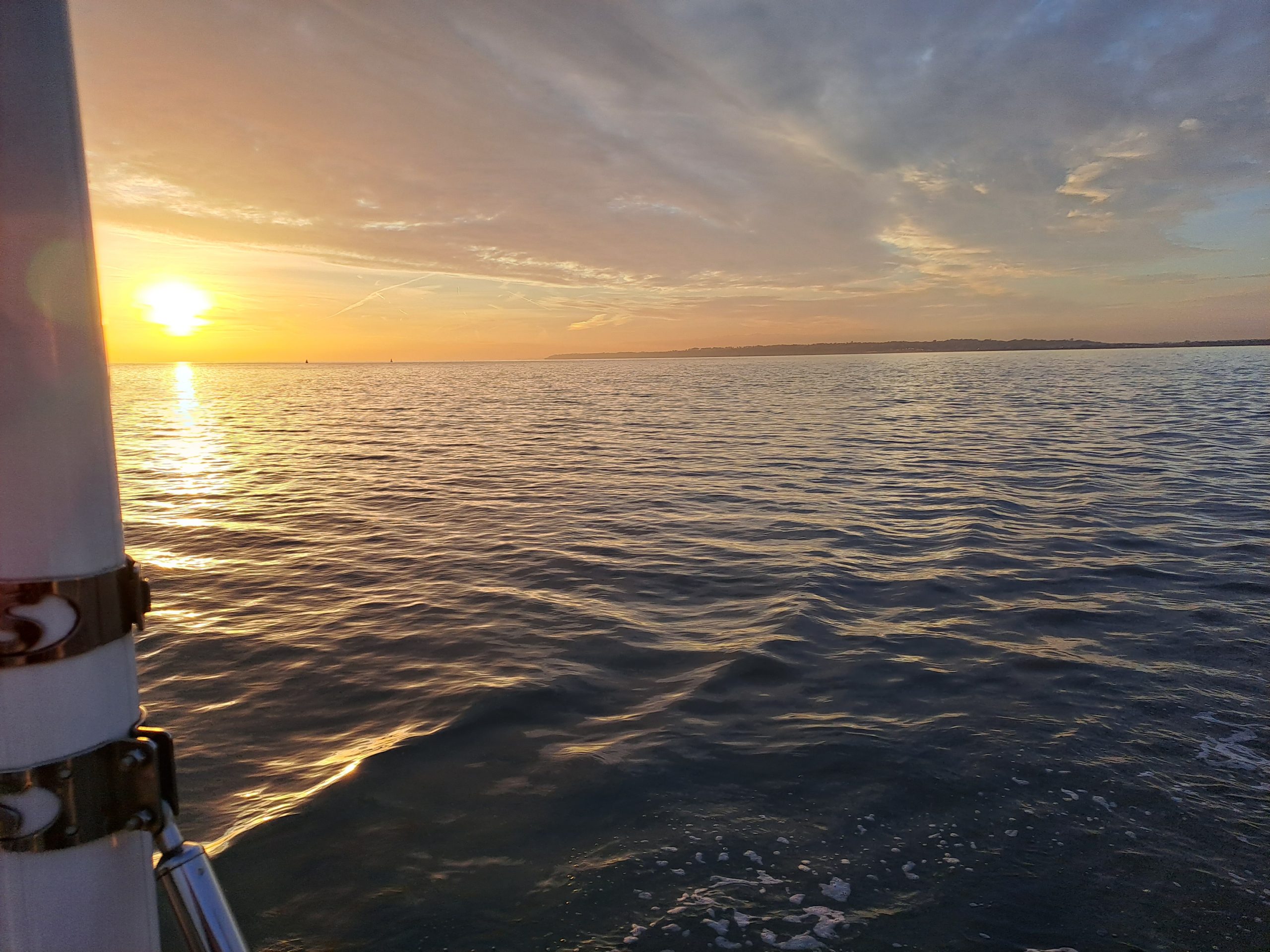
Accompanied by a beautiful sunset, we walk into Ostend.
London with the Elise
Needless to say, the voyage, the trip holds unforgettable souvenirs.
Certainly the image of Tower Bridge at night remains with us….
If you would like to take this London trip, please allow for a minimum of 5 days.
If you want to see London for several days, add days to…