


Cowes and the Solent: the mecca of sailors
Once in a lifetime, every sailor should visit Cowes an the Solent!
There are dozens of reasons, in the course of the story you will understand why this trip is a must for the sea sailor.
Cowes is located in south England, at the tip of ‘the Isle of Wight’ and on the waterway the ‘Solent’. This cosy little town is the centre of sailing in the UK and far beyond. Legendary races such as the Fastnet race and many small and large regattas depart from here.
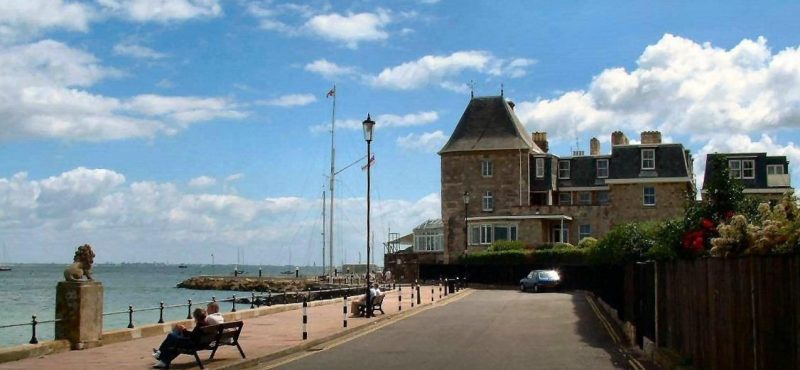
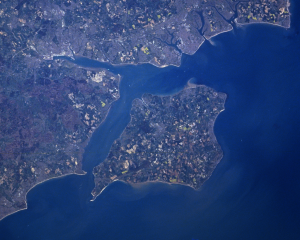
The Solent is sheltered to the north-west of the Isle of Wight, protected from the influences of the open sea, yet always with a pleasant sailing breeze. On the Solent you will find historic towns like Southampton and Portsmouth, shipyards, museums, universities (obviously specialising in naval architecture), many places of interest. Everything breathes nautical atmosphere and history.
And as so often with sailing trips, the trip, the route to this destination is an unforgettable experience.
The trip preparation is a tough job, we prefer sailing to the destination in one go, it impossible in a 24-hour period. We count at least a day and a half, so wind direction and strength will have an important role. We keep a close eye on the forecasts the days beforehand, but on the day(s) itself you are at the mercy of the weather gods.
We embark the evening before to leave on time in the morning. With little wind predicted, we leave with the current around 9 a.m. and, with a little motoring, we manage to do an average of 7 knots. We decided to go along the Zuydcoote pass. Always nice to sail along the French coast and see Dunkirk again. Around noon, we are at the height of Calais and on the other side we can already see the cliffs of Dover.
Oostende - Cowes

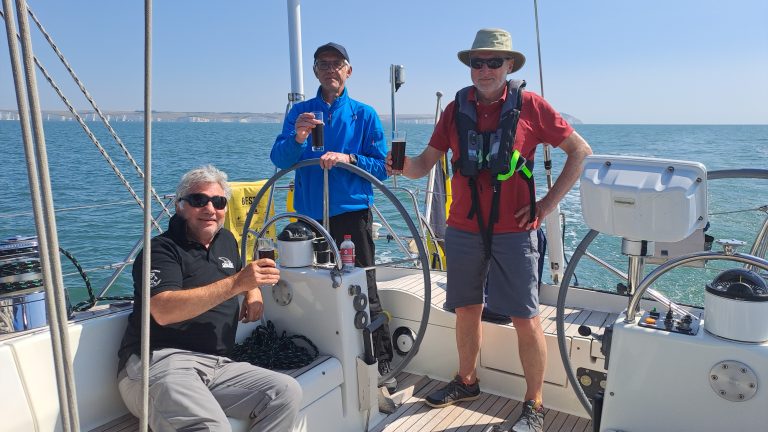
The meals on board have something special!
Out in the open together in the cockpit, under the bimini… enjoying a pasta with pesto, chicken and sun-dried tomatoes. just a nice baguette with hot sausage ‘hot dog’ or cheeseburger we like it!
There is plenty of creativity to vary the appetisers over the afternoon and evening.
Time for aperitif!
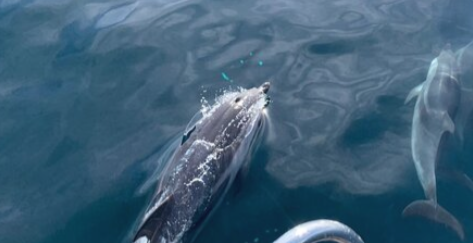
Yay! Around 3pm, we note ‘DOLFINS’ in the logbook. This time they rush ahead and alongside the bow as if to prove that they are faster than us! Always a special moment that, fortunately, we often write in the logbook on similar trips.
We can start crossing the ‘traffic-lane’ in the Channel safely. Always exciting. The crew focuses on the chart plotter. It can be very busy.
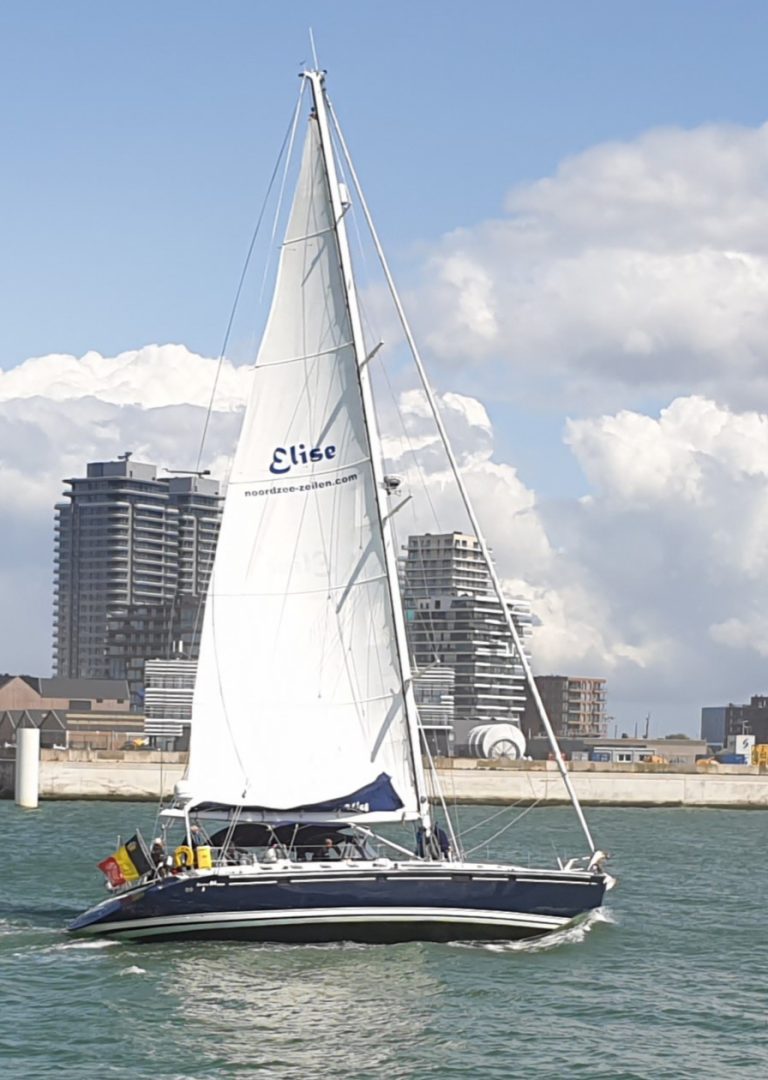
Before departure, arrangements are made with the ‘crew’ about the layout and duration of the ‘watches’. Important, not so much for daytime, but for the night trip. Experience tells us that four hours of watch is ideal, not too tiring for the watchman who has to stay alert and enough for a nap by the other crew. With always three or more certificated shipmates, there is no problem in putting together at least two balanced shifts.
During the day, that shift play is not so important, everyone takes the helm at times and when crossing the traffic system (the TSS: the Channel’s shipping highway), everyone is along for the ride.
From 9pm onwards, it’s discipline! Shift 1 takes responsibility after dinner, shift 2 goes to sleep. Meanwhile, there is a nice breeze so the Elise goes into the night without disturbing engine noise.
You have to experience it: night sailing is something special! The atmosphere is hard to describe, the darkness and silence set the senses on edge and the gentle sound of the ship cleaving the waves is an experience in itself. Completely dark it is not, the stars, the lights of the towns and villages on the coastal strip help orientate you.
Of course, it remains to look out for the navigation lights of nearby ships, the chart plotter gives you info on commercial shipping, meanwhile a good lookout is essential!
At 1am, it’s up to shift 2 to take over. These have the thankless ‘dog watch’, this watch is the hardest to keep vigilant! Strictly speaking, the dog watch is from midnight to four o’clock, by agreement this time we start the first group at 9pm and so we partially share the ‘difficult’ hours.
The trip along the English coast is certainly not boring, you sail between the diverse coastal landscape and the busy fairway. Now it is night and looking out for landmarks, often lighthouses or rare buoys. Relatively recent phenomena are the wind farms that very recognisably break the darkness with red flashing lights on the turbines.
The landmarks, milestones on this route are Dungeness, Beachy Head or well-known towns like Eastborne, Newhaven and Brighton. By day (as on the return), there is plenty of time to admire the attractive and varied natural beauty of the coast, now we have only the lights.
We note in the logbook that the wind force gradually increases and the boat speed picks up to 9 knots. At ‘Beachy Head’ almost 40 miles past Dover, the Elise is running 8 knots over water, but the current pushes along and we record 9.2 knots over ground around 4.30am. It’s up to the first watch crew to take back the helm.
The trip along the English coast
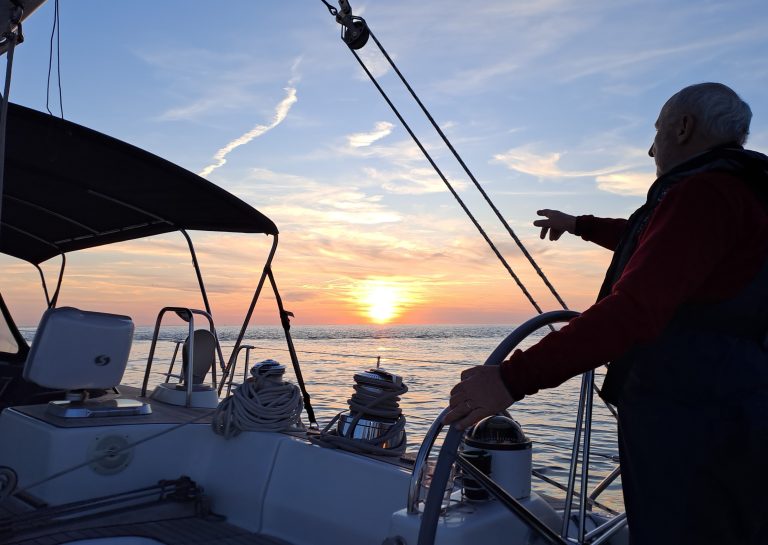
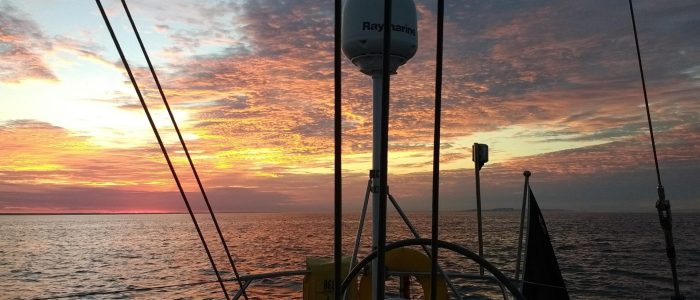
Of course the dawn and sunrise at sea is also a special moment, the colours, the scenery the atmosphere you don’t forget.
Meanwhile, watch carefully, there is a wind farm on the course and we are approaching the eastern approach for the ‘Solent’. In the morning, the wind picks up and we need to reduce some sail.
In the early 19th century, Portsmouth was the most heavily fortified city in the world and was considered ‘the greatest naval port in the world’. A ring of defensive forts on land and sea, known as the Palmerston Forts, was built around Portsmouth. These Round Forts (called cowes) lie port and starboard in the Solent as we set course for Cowes.
For safety, we follow the well-defined fairway, which is still 13 miles and in the Solent the current is not negligible! Plenty of opportunity to admire the island’s rolling landscape. On the water you can see large and small sailing yachts cruising back and forth, with some luck we can spot a regatta.
After noon, we dock in the busy Cowes Yacht Harbour, not always easy for a 64-foot vessel.
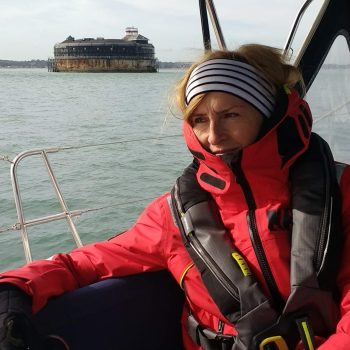
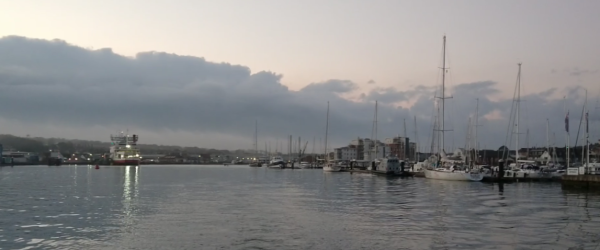
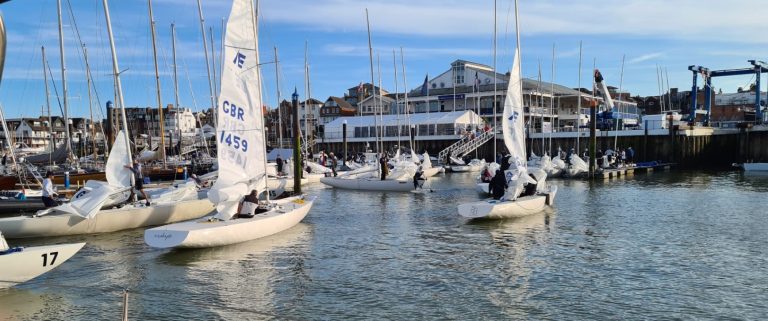
Cowes, time to soak up the towns atmosphere
The pleasant narrow main street (High Street is almost entirely traffic-free) is a colourful mix of restaurants, nautical clothing shops, boutiques and souvenir shops. Don’t forget to stop for a moment at the display window of the Beken family of photographers. They have been photographing yachts such as sailing schooners, steam yachts and later modern yachts on the Solent since the late 19th century. The sometimes spectacular action photos are gems for those looking for a souvenir.
Look in the side streets leading to the various harbours, where there are cosy pubs all about sailing.
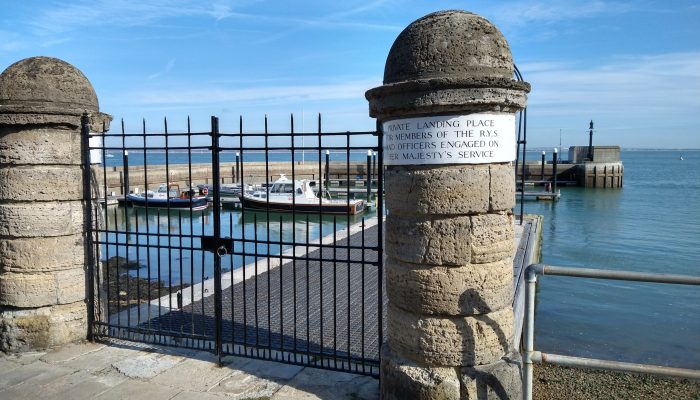
You should definitely walk down to the ‘Esplanade’ where the two Royal Yacht Clubs are located and we can see the competition starting flags. Small cannons stand on the quay ready to give the starting gun as this is where the Fastnet race, the Round the Island Race, the Ocean Race and, of course, Cowes week departs.
The Isle of Wight
For those with more time, the surrounding area has a lot to offer.
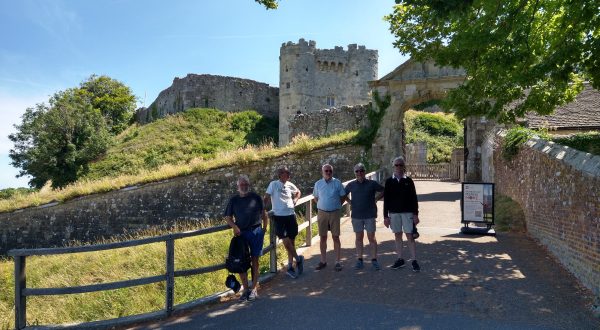
Cowes lies on the River Medina, which you can explore by water taxi, for example, to visit the town of Newport and possibly Carisbrooke Castle.
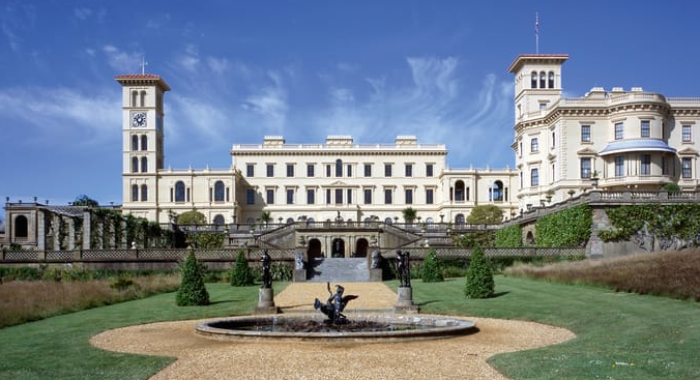
Not to be missed is a visit to Osborne House, a former royal residence, now a museum with beautiful gardens where you can enjoy a high tea. It was built as a summer residence for Queen Victoria and her husband Prince Albert.
You really are on the film set for a historical drama: Victoria and Abdul, Mrs Brown, Edward the king, A history of Britain, Treasure hunt, Victoria and Albert, The victorians… all contain scenes from Osborne House.
Down by the Solent runs a small track to take Queen Victoria’s bathing coach to the Solent….
It’s quiet time to start the return journey. There are several options, to be considered according to the time available.
The return...
The Needles
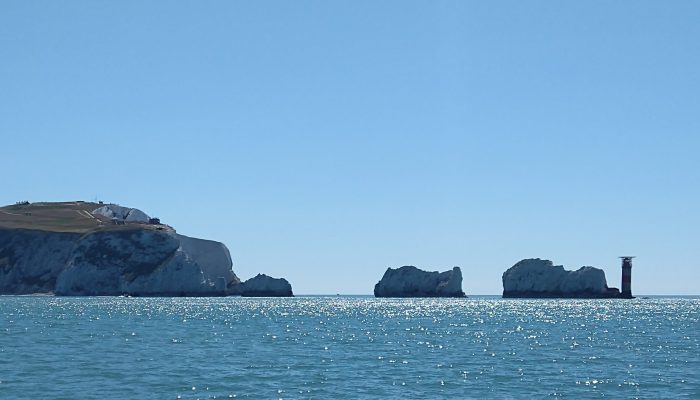
In the western Solent to the sea, you pass the ‘Needles’. These jagged rocky points are ‘the sentinels’ on the open sea, having passed the narrowest stretch at Hurst Castle and Yarmouth.
It is a wonderful route for lovers of the jagged landscape. No wonder the Solent is so popular with sailors. You have to calculate very well to have right the current and you can go in different directions at the Needles.
Any trip east (i.e. home) via the Needles is 50 miles longer, you have to allow for night trips.
Where to go from Cowes...
You could, of course, use that strait to do a round the Isle of Wight! Definitely worthwhile for driven sailors.
Count on a hefty day trip and dodging rocks and shallows. 65 to 70 miles, that’s easily 10 hours of sailing with and against current.
The Solent and Cowes are a coveted stopover on the way to or from further western ports and cruising grounds. Poole is close by and set in an idyllic bay. Further destinations on the south coast include Weymouth, Dartmouth and Plymouth.
Crossing the Channel is also possible, Cherbourg or even the Channel Islands are within acceptable distance. You could opt for a ‘French’ return trip past Cherbourg, Ouistreham, Dieppe, Dunkirk, etc.
Alas – we have to get home – so we head along the east side of the island and plan a stopover in Brighton.
The western option to Brighton is too long for a day trip and we are lucky, the ESE – wind of around 15 knots ensures that we are constantly sailing between the coast and the traffic system at 7 knots and more. We left Cowes at 9:40am and after eight hours of lovely sailing, we moor the Elise in Brighton’s new harbour.
That port is beyond the city so we sail past the legendary Pier, a foretaste that makes us long for a visit.
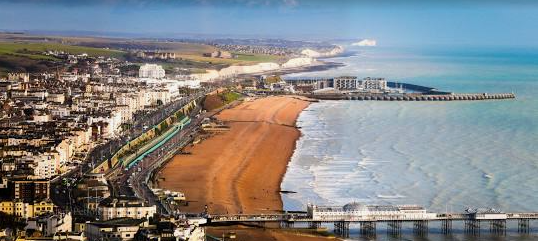
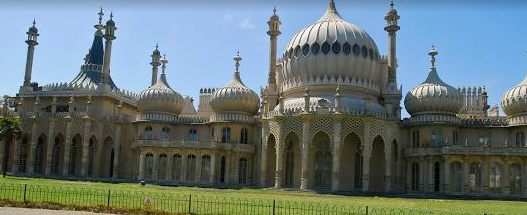
Given the tropical temperatures (40°), we take the historic little train that shuttles between the city and the harbour. Brighton is one of the UK’s most famous and largest seaside resorts. It is still home to many old Victorian buildings including the striking Royal Pavilion converted by John Nash for George IV. Fun anecdote; Queen Victoria sold this remarkable building to pay for Osborne House.
We take a look around the spectacular pier full of various attractions, playhouses, pubs, clubs, bars, restaurants, cafés and shops, populated by a colourful and diverse crowd.
We walk along the embankment back to our ship to have dinner in the outdoor cockpit, enjoying the evening sun.
Although there is a wide range of restaurants in every port town, we like to chill out on board. You take your time, cosy aperitifs, snacks and there is always a volunteer ship’s cook. It doesn’t have to be culinary delights, often someone has prepared a delicacy and frozen it away in the comfortable galley.
At the table, we discuss plans for the onward journey back.
We opt for another stop in Dover, the forecast promising sailing fun again.
And it’s true: from the start at 8:00 am we record 18 – 19 knots of true wind. The Elise cleaves the waves again at 8 knots. At Beachy Head, we tack for the first time and see the counter go to 9 knots. With sunny, weather (we learn afterwards that it was swelteringly hot ashore) and the favourable sailing wind, we once again enjoy this voyage.
These are rolling landscapes that pass Hastings and Dungeness and Folkestone at the last turn into the famous White Cliffs of Dover.
We could have been there by 20:00h if the wind had stayed in post. Alas, unsurprisingly after a hot day: around 19:00h we enter windlessness, occasional whiffs of wind from varying angles. In short, there is no more progress unless we use the iron sail (the Yanmar 136HP). So it is only at 10pm that we moor at a hammerhead in the new harbour. That new port is a blessing for us, as in the old outer harbour there was barely any usable space for a (nearly) 20-metre vessel.
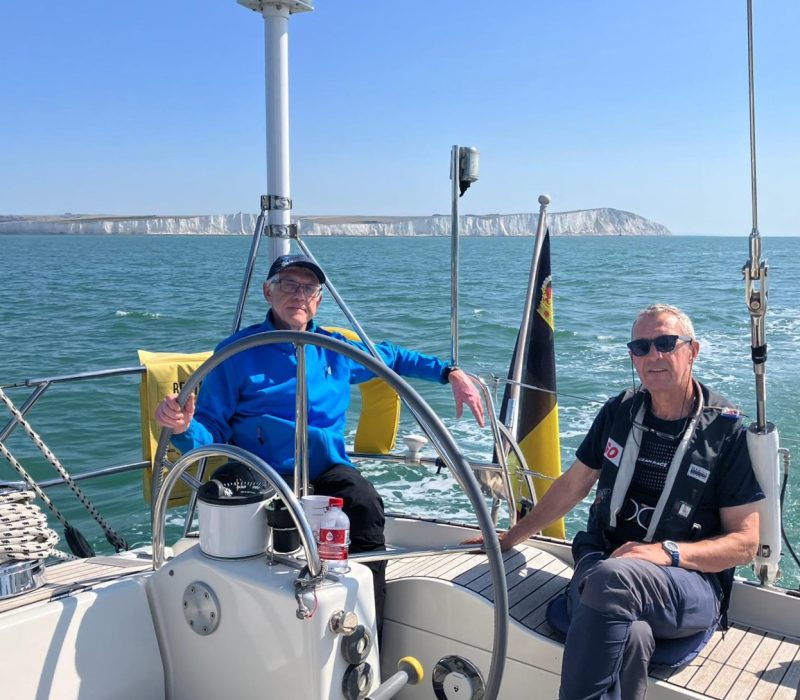
Dover Ostend is a familiar trip for the skipper and regular crew. We cast off again around 9:00 am, are ordered to use the Eastern ‘entrance’ and decide to cross the Traffic lane immediately.
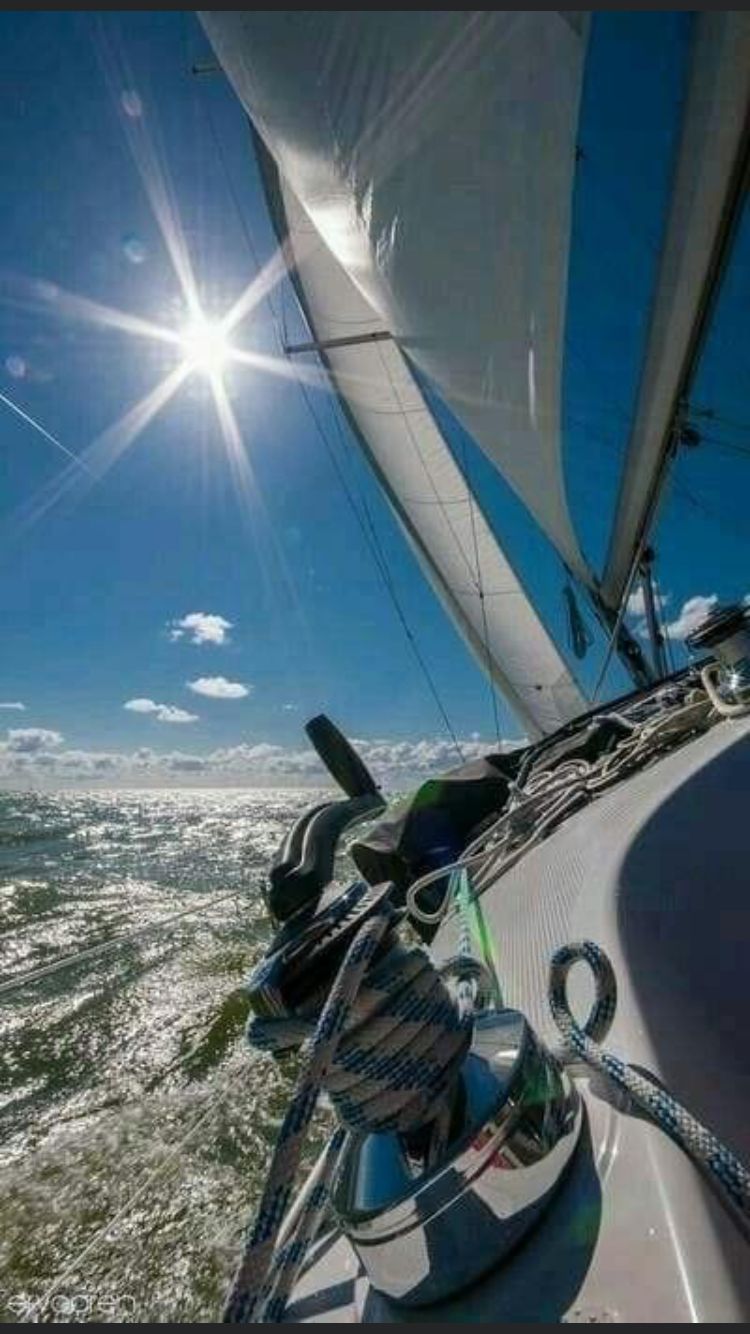
The southwest wind helps, as at 17 to 20 knots we can safely cross the ‘ship’s highway’ on sail at 8 knots over ground.
By noon, we are on the French coast and past Dunkirk to the Zuydcoote Pass. To sail along the French coast, it is important to have the tide and wind with us. Speed over ground varies between 8-10 knots.
Calm sea, winds of 18-20 knots and sunshine. Our last day could not have been better. Sailing is truly enjoyable!
The lock master of the Mercator Marina has us in his sights and holds the lock for us. Fifteen minutes later, we are moored in our spot, happy after another great day of sailing.
Cowes and the Solent, lots of opportunities!
For timing, you are very dependent on the weather gods. It’s best to opt for a night leg. That way, you make at least one big leap in your itinerary. We are happy to help you, with our crew taking the lead on every watch, which is at least two people.
We can plan the return trip according to the time available and the weather. Each of the cities/ports we visited on the way back can be sailed on a day trip.
Each destination is worth a visiting day, allow for space in the plan.